Biogas in Kerala: Best Practices for Maximum Energy Output
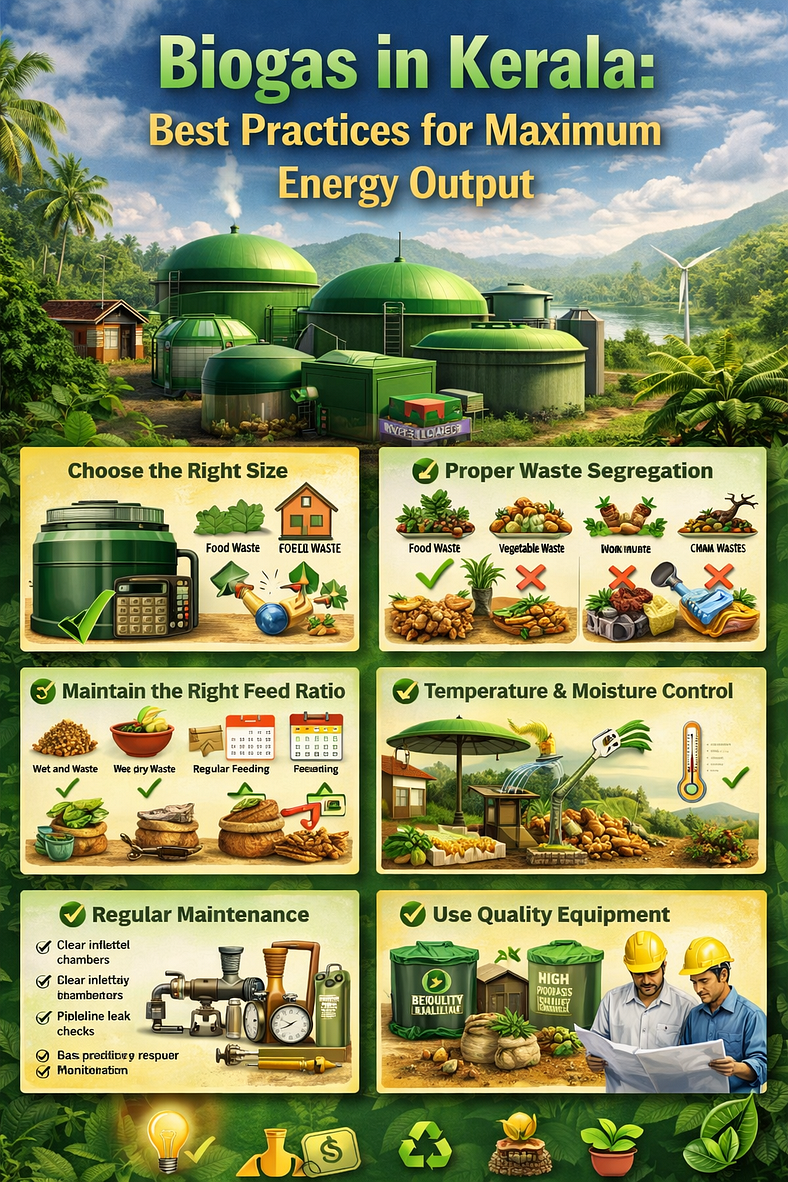
With increasing fuel costs and strict waste management rules, biogas in Kerala is becoming a preferred renewable energy solution for homes, apartments, hotels, and industries. However, installing a biogas plant alone is not enough — maximum energy output depends on proper practices, maintenance, and usage.
This article explains the best practices to get the highest efficiency from biogas in Kerala.
Why Efficiency Matters in Biogas Plants
An efficient biogas system:
- Produces more gas from the same waste
- Reduces operating costs
- Ensures faster return on investment
- Prevents odor and operational issues
- Following best practices is crucial to make biogas in Kerala truly cost-effective and sustainable.
Choose the Right Size Biogas Plant
One of the most common mistakes is incorrect plant sizing.
Best practice:
- Calculate daily organic waste accurately
- Match plant capacity to actual waste generation
- Avoid overloading or underutilizing the plant
Correct sizing ensures steady gas production and longer plant life.
Proper Waste Segregation Is Essential
High-quality gas output starts with proper input.
Best inputs:
- Food waste
- Vegetable waste
- Animal dung
- Agricultural residue
Avoid:
- Plastic
- Metal
- Chemicals
- Excess oil
Clean segregation significantly improves performance of biogas in Kerala systems.
Maintain the Right Feed Ratio
Feeding the plant with balanced organic material is critical.
Best practices include:
- Mixing wet and dry waste
- Maintaining consistent daily feeding
- Avoiding sudden changes in feed quantity
A stable feed ratio ensures continuous and high-quality biogas production.
Temperature and Moisture Control
Kerala’s climate is ideal for biogas, but basic control is still required.
Tips:
- Keep the digester shaded
- Avoid waterlogging during monsoon
- Maintain optimal moisture levels
Stable conditions result in better bacterial activity and higher energy output.
Regular Maintenance and Monitoring
To maximize output from biogas in Kerala, regular checks are essential.
Maintenance checklist:
- Clean inlet and outlet chambers
- Check gas pipelines for leaks
- Remove excess slurry periodically
- Monitor gas pressure
Scheduled maintenance prevents breakdowns and efficiency loss.
Use Quality Equipment and Technology
Low-quality components can reduce output and increase maintenance costs.
Best practice:
- Choose proven digester technology
- Use corrosion-resistant gas pipelines
- Install safety valves and pressure regulators
Reliable technology ensures consistent performance.
Utilize By-Products Effectively
Biogas slurry is a valuable organic fertilizer.
Benefits:
- Improves soil fertility
- Reduces chemical fertilizer usage
- Adds extra economic value
Using slurry effectively increases overall ROI of biogas in Kerala installations.
Work with Experienced Biogas Providers
Poor design and installation are major reasons for low output.
Always:
- Choose experienced installers
- Ask for performance guarantees
- Ensure after-installation support
Expert guidance plays a key role in long-term success.
Future Outlook of Biogas in Kerala
With increasing focus on waste-to-energy, future regulations will demand higher efficiency and compliance. Plants that follow best practices today will benefit the most in the coming years.
Conclusion
By following the right strategies — from proper sizing and waste segregation to regular maintenance — biogas in Kerala can deliver maximum energy output and long-term savings.
Whether for homes, apartments, or industries, adopting these best practices ensures cleaner energy, lower costs, and a sustainable future.


.jpg)
Comments
Post a Comment