Biogas in Kerala: How to Convert Food Waste into Valuable Energy
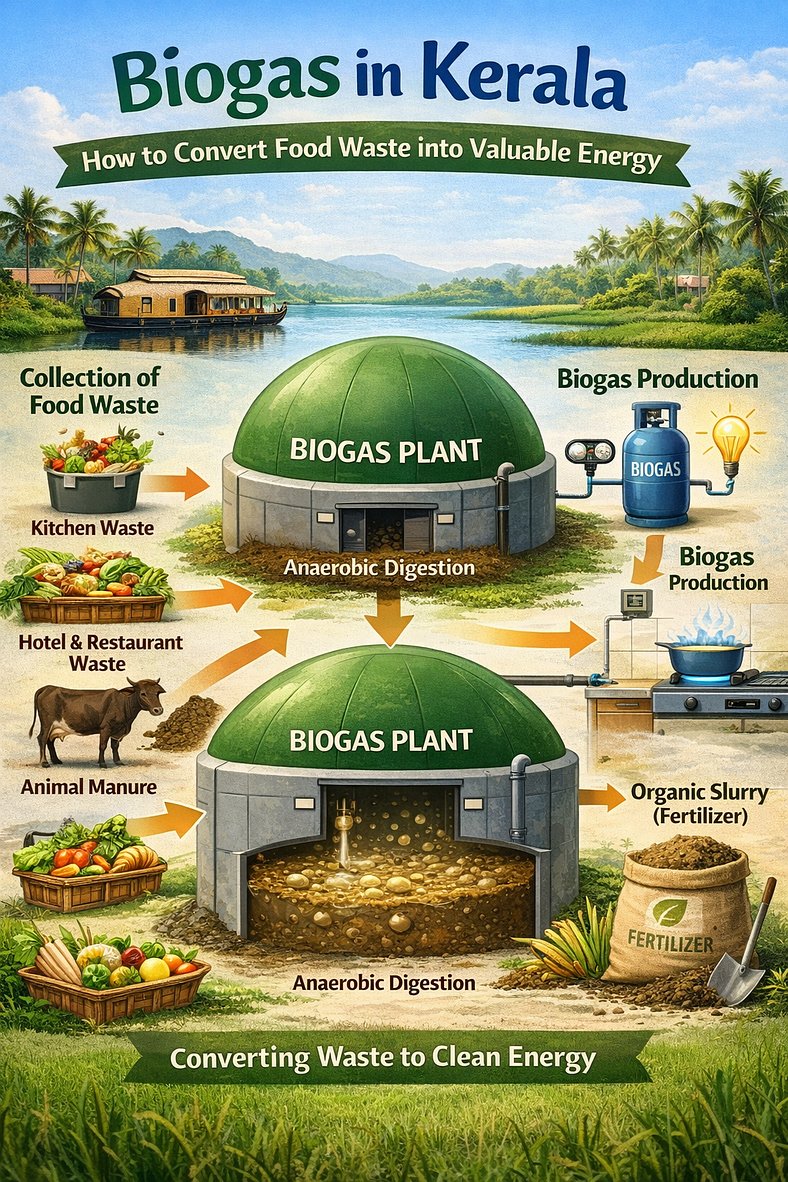
Food waste is one of the biggest environmental challenges faced by Kerala today. With limited landfill space and increasing urbanization, sustainable waste management has become essential. Biogas in Kerala offers an effective solution by converting food and organic waste into valuable, renewable energy while protecting the environment.
What Is Biogas?
Biogas is a renewable fuel produced when organic waste such as food scraps, kitchen waste, vegetable waste, and animal manure decomposes in the absence of oxygen. This natural process, called anaerobic digestion, produces methane-rich gas that can be used for cooking, electricity generation, and heating.
Why Biogas in Kerala Is Important
Kerala generates large quantities of biodegradable waste every day from homes, hotels, restaurants, markets, and institutions. Improper disposal causes pollution and health risks. Biogas in Kerala helps address these issues by:
- Reducing food waste at the source
- Producing clean and renewable energy
- Lowering dependence on LPG and fossil fuels
- Minimizing environmental pollution
Types of Food Waste Used for Biogas in Kerala
Biogas plants can efficiently process:
- Household kitchen waste
- Food waste from hotels, hostels, and canteens
- Vegetable and fruit market waste
- Leftover food from institutions
- Poultry and animal waste
This makes biogas technology suitable for both small-scale and large-scale applications.
How Food Waste Is Converted into Biogas
The biogas production process involves:
- Collection of food and organic waste
- Feeding waste into the biogas digester
- Anaerobic digestion by microorganisms
- Production of biogas (methane)
- Output of organic slurry used as fertilizer
This process ensures efficient waste reduction and energy recovery.
Benefits of Biogas in Kerala
1. Renewable Energy
Biogas replaces conventional fuels and provides a reliable source of clean energy.
2. Effective Waste Management
Food waste is treated locally, reducing the burden on municipal waste systems.
3. Cost Savings
Users save money on cooking gas and electricity over time.
4. Environmental Protection
Biogas reduces greenhouse gas emissions and prevents open dumping.
5. Organic Fertilizer
The by-product slurry improves soil fertility and supports organic farming.
Applications of Biogas in Kerala
- Residential houses and apartments
- Hotels, restaurants, and resorts
- Hospitals and educational institutions
- Poultry farms and dairy farms
- Community and municipal projects
Biogas plants can be customized based on waste availability and energy demand.
Government Support for Biogas in Kerala
The Kerala government encourages biogas adoption through:
- Subsidies for household biogas plants
- Support for institutional and community plants
- Awareness programs on sustainable waste management
- These initiatives make biogas installations more affordable and accessible.
Challenges and Solutions
Common challenges include lack of awareness, improper maintenance, and initial costs. These can be overcome by:
- Proper plant design and installation
- Regular maintenance and training
- Professional technical support
Future of Biogas in Kerala
With increasing waste generation and rising energy costs, biogas in Kerala has a promising future. Wider adoption of food waste-based biogas systems will help Kerala move towards sustainable development and energy self-reliance.
Conclusion
Biogas in Kerala is a practical and eco-friendly solution for converting food waste into valuable energy. By adopting biogas technology, households, institutions, and businesses can contribute to cleaner cities, reduced waste, and a greener future.


.jpg)
Comments
Post a Comment