Biogas in Kerala: Is It the Future of Sustainable Living?
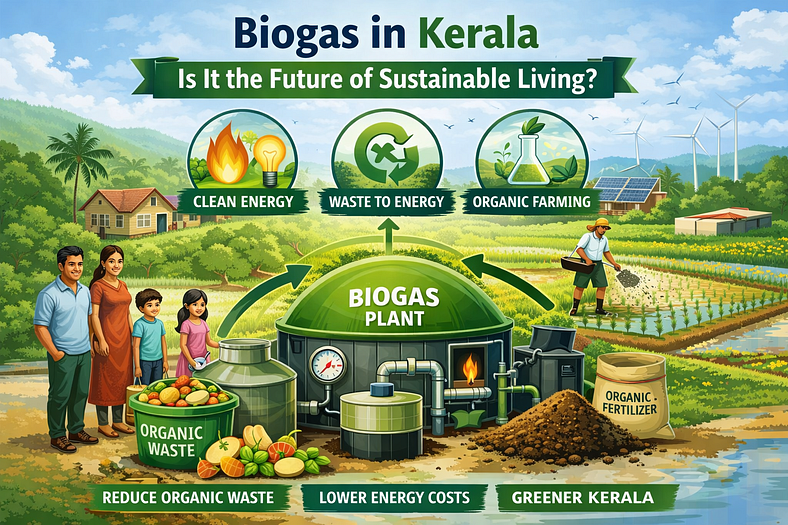
Sustainable living is no longer a choice — it is a necessity. With rising waste generation, energy demand, and environmental concerns, Kerala is actively looking for eco-friendly solutions. In this context, biogas in Kerala has emerged as a powerful alternative that supports clean energy, efficient waste management, and long-term sustainability.
But is biogas truly the future of sustainable living in Kerala? Let’s explore.
What Is Biogas and Why It Matters in Kerala
Biogas is a renewable energy source produced by breaking down organic waste such as food scraps, kitchen waste, animal dung, and agricultural residue in the absence of oxygen. The result is biogas for energy and nutrient-rich slurry for farming.
Kerala generates a large volume of biodegradable waste every day, making biogas in Kerala a highly practical and locally suitable solution.
Why Biogas Fits Kerala’s Sustainable Living Goals
Kerala’s dense population, limited land availability, and environmental sensitivity demand decentralized and eco-friendly systems. Biogas perfectly aligns with these needs.
1. Reduces Organic Waste at the Source
Biogas plants allow households, apartments, hotels, and institutions to process waste at the point of generation, reducing dependency on dumping yards.
2. Promotes Clean and Renewable Energy
Biogas can replace LPG, firewood, and fossil fuels. This reduces carbon emissions and helps households become energy self-sufficient.
3. Supports Circular Economy
Waste is converted into energy, and the by-product is used as organic fertilizer — making biogas in Kerala a key part of a circular and sustainable economy.
Role of Biogas in Sustainable Living
Eco-Friendly Waste Management
By preventing organic waste from decomposing in open areas, biogas plants reduce methane emissions, bad odor, and pest problems.
Cost Savings for Households
Once installed, biogas plants significantly reduce cooking gas expenses. Over time, this makes sustainable living affordable and practical.
Boost to Organic Farming
The slurry produced from biogas plants improves soil fertility and reduces dependency on chemical fertilizers.
Applications of Biogas in Kerala
Biogas systems are widely used across:
- Residential homes and villas
- Apartments and gated communities
- Hotels, hostels, and canteens
- Poultry farms and dairy farms
- Schools, hospitals, and public institutions
- These applications prove that biogas in Kerala is adaptable to both small-scale and large-scale needs.
Government Support for Biogas in Kerala
The Kerala government actively promotes biogas through:
- Subsidies for household and community biogas plants
- Support from local self-government bodies
- Integration with decentralized waste management policies
- Awareness and training programs
Such initiatives strengthen the adoption of biogas as a sustainable living solution.
Challenges to Widespread Adoption
Despite its advantages, biogas adoption faces some challenges:
- Lack of proper maintenance
- Limited awareness about correct usage
- Space constraints in urban areas
- Initial installation cost
However, modern compact biogas plants and professional maintenance services are addressing these issues effectively.
Future of Biogas in Kerala
With increasing environmental awareness and stronger government policies, the future of biogas in Kerala looks promising. Community-level biogas plants, apartment-based systems, and industrial waste-to-energy projects will play a major role in shaping sustainable living.
As Kerala moves toward green energy and zero-waste goals, biogas will remain a core solution.
Conclusion
So, is biogas the future of sustainable living in Kerala? The answer is yes. Biogas in Kerala offers an environmentally friendly, cost-effective, and practical solution to waste management and energy needs. By adopting biogas, households and institutions can actively contribute to a cleaner, greener, and more sustainable Kerala.


Comments
Post a Comment