Biogas in Kerala: Supporting a Circular Economy and Clean Environment
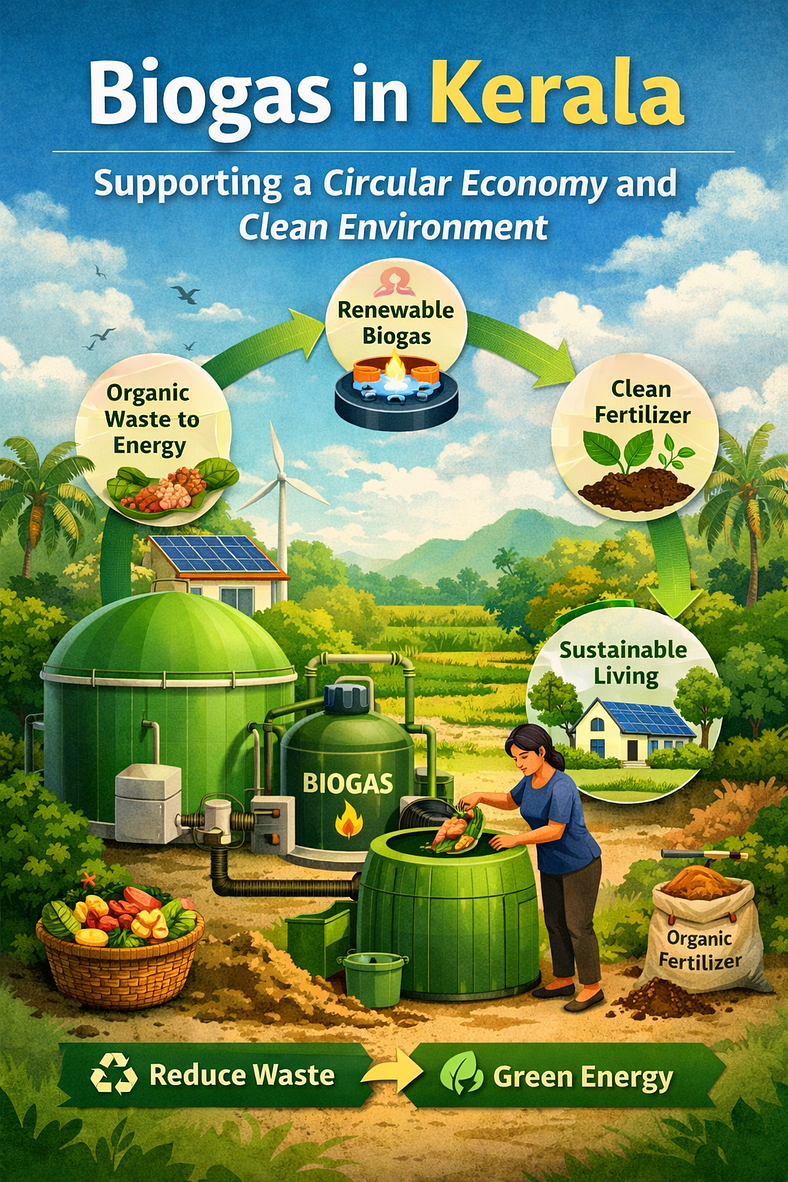
Kerala is facing growing challenges related to waste management, rising energy costs, and environmental pollution. In this scenario, biogas in Kerala has emerged as a sustainable and practical solution that supports a circular economy while protecting the environment. By converting organic waste into clean energy, biogas technology is helping homes, institutions, and industries move towards a greener future.
What Is Biogas?
Biogas is a renewable energy source produced through the anaerobic digestion of organic waste such as food waste, animal waste, and agricultural residues. The process generates methane-rich gas that can be used for cooking, electricity generation, and heating. The leftover slurry acts as an excellent organic fertilizer.
Importance of Biogas in Kerala
Kerala generates a large volume of organic waste every day from households, hotels, markets, hospitals, and food-processing units. Traditional waste disposal methods like landfilling and dumping cause severe environmental issues. Biogas in Kerala plays a crucial role in solving these problems by:
- Reducing organic waste at the source
- Minimizing landfill dependency
- Producing clean and renewable energy
- Lowering greenhouse gas emissions
Biogas and the Circular Economy
A circular economy focuses on reducing waste, reusing resources, and recycling materials. Biogas plants perfectly fit this model:
- Waste to Energy: Food and organic waste are converted into useful fuel
- By-product Utilization: Digested slurry is reused as natural manure
- Resource Efficiency: Energy and nutrients are reused instead of discarded
By adopting biogas in Kerala, communities can close the loop between waste generation and energy consumption.
Environmental Benefits of Biogas in Kerala
The environmental advantages of biogas systems are significant:
- Reduces methane emissions from open waste dumping
- Prevents soil and water contamination
- Lowers dependence on fossil fuels and LPG
- Improves overall air quality
Biogas technology supports Kerala’s goal of becoming a cleaner and more sustainable state.
Economic Advantages of Biogas Plants
Apart from environmental benefits, biogas in Kerala also offers economic value:
- Reduced cooking fuel and electricity expenses
- Low operational and maintenance costs
- Long-term return on investment
- Reduced waste transportation and disposal costs
Hotels, apartments, institutions, and industries can significantly cut operational costs by installing biogas plants.
Applications of Biogas in Kerala
Biogas plants are widely used across different sectors, including:
- Residential homes and apartments
- Hotels and resorts
- Educational institutions and hostels
- Hospitals and canteens
- Municipal and industrial waste facilities
With scalable plant sizes, biogas solutions can be customized to meet specific needs.
Government Support and Awareness
The Kerala government and local bodies actively promote biogas projects through subsidies, awareness programs, and sustainable waste management initiatives. This support has accelerated the adoption of biogas in Kerala across urban and rural areas.
Future Scope of Biogas in Kerala
As waste generation continues to increase, the demand for efficient waste-to-energy solutions will grow. Biogas technology has immense potential to:
- Strengthen decentralized energy production
- Support zero-waste initiatives
- Create green jobs and sustainable livelihoods
- Enhance Kerala’s renewable energy capacity
Conclusion
Biogas in Kerala is more than just an energy solution — it is a powerful tool for building a circular economy and ensuring a clean environment. By turning waste into valuable resources, biogas plants help reduce pollution, save costs, and promote sustainable living. Embracing biogas technology today will pave the way for a greener and more resilient Kerala tomorrow.


Comments
Post a Comment