Biogas in Kerala: Turning Food and Organic Waste into Clean Energy
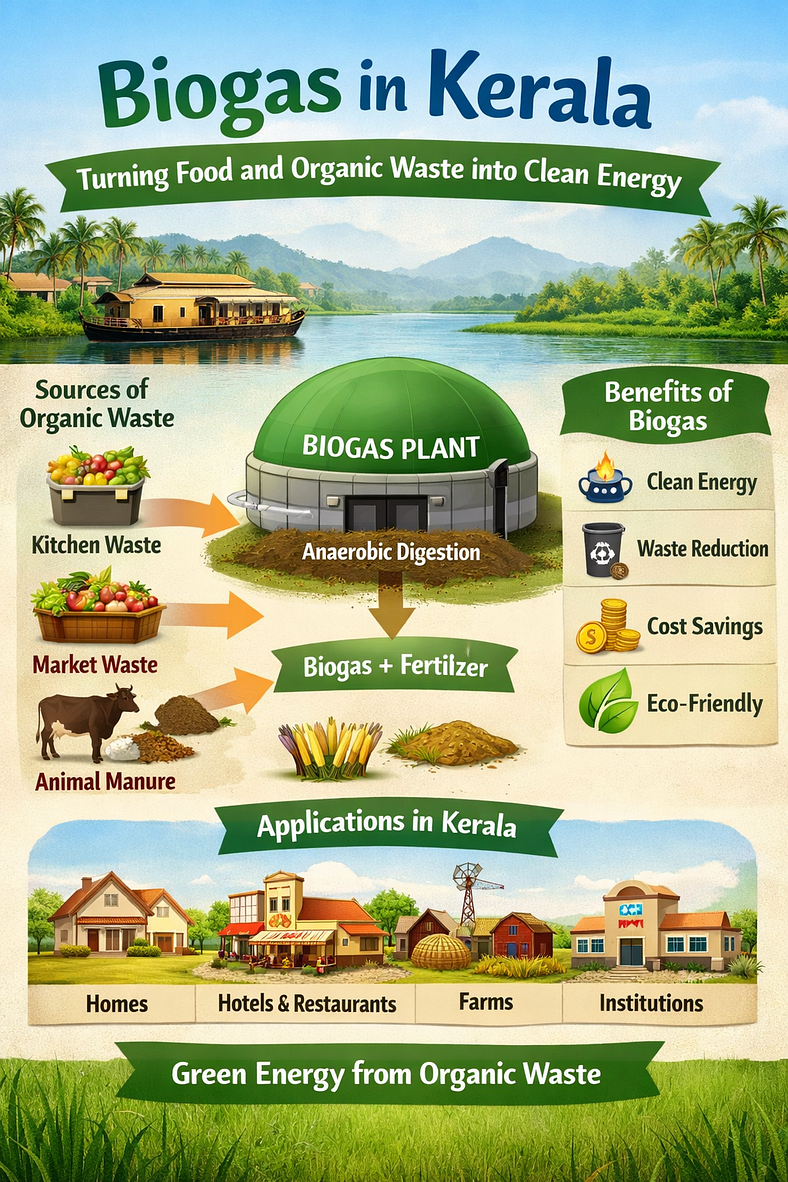
Kerala is facing increasing challenges related to waste management and energy sustainability. With limited land availability and a growing population, managing food and organic waste has become a major concern. Biogas in Kerala is emerging as an effective and eco-friendly solution that converts organic waste into clean, renewable energy while reducing environmental pollution.
What Is Biogas?
Biogas is a renewable fuel produced through the decomposition of organic waste such as food scraps, kitchen waste, animal manure, and agricultural residue in the absence of oxygen. This process, known as anaerobic digestion, produces methane-rich gas that can be used for cooking, electricity generation, and heating.
Why Biogas in Kerala Is Gaining Importance
Kerala generates a large amount of biodegradable waste every day from households, hotels, markets, and institutions. Dumping and landfilling are no longer sustainable options. Biogas in Kerala offers a practical solution by:
- Reducing food and organic waste
- Producing clean and renewable energy
- Minimizing pollution and greenhouse gas emissions
- Supporting decentralized waste management
Sources of Organic Waste for Biogas in Kerala
Biogas plants in Kerala commonly use:
- Household kitchen waste
- Food waste from hotels, hostels, and restaurant
- Vegetable and fruit market waste
- Poultry and animal waste
- Agricultural residues
This makes biogas a highly adaptable technology for both urban and rural areas.
Benefits of Biogas in Kerala
1. Clean Energy Generation
Biogas replaces LPG, firewood, and fossil fuels, reducing dependency on non-renewable energy sources.
2. Effective Waste Management
Organic waste is processed at the source, reducing the burden on landfills and municipal systems.
3. Cost Savings
Over time, biogas significantly reduces fuel and electricity expenses for homes, institutions, and businesses.
4. Eco-Friendly Solution
Biogas helps lower methane emissions from open dumping and contributes to a cleaner environment.
5. Useful By-Product
The leftover slurry from biogas plants acts as a high-quality organic fertilizer.
Applications of Biogas in Kerala
- Residential homes and apartments
- Hotels, restaurants, and resorts
- Hospitals and educational institutions
- Poultry farms and dairies
- Municipal waste management projects
Biogas plants can be customized based on waste quantity and energy requirements.
Government Support for Biogas in Kerala
The Kerala government and local bodies promote biogas installations through:
- Subsidies for household biogas plants
- Support for institutional and community biogas projects
- Awareness programs on decentralized waste management
These initiatives encourage the adoption of biogas in Kerala as a sustainable energy solution.
Challenges and Solutions
While biogas adoption is growing, challenges such as improper maintenance, lack of awareness, and initial installation costs exist. These can be overcome through:
- Professional plant design and installation
- Regular maintenance and training
- Awareness campaigns and technical support
Future of Biogas in Kerala
With rising energy costs and strict waste management regulations, biogas in Kerala has a strong future. Increasing adoption across households, institutions, and industries will help Kerala move toward a cleaner, greener, and more sustainable energy model.
Conclusion
Biogas in Kerala is not just a waste management solution — it is a step toward energy independence and environmental responsibility. By turning food and organic waste into clean energy, biogas supports sustainable development and offers long-term benefits for individuals, businesses, and the state as a whole.


Comments
Post a Comment