Role of Biogas in Kerala’s Waste-to-Energy Ecosystem
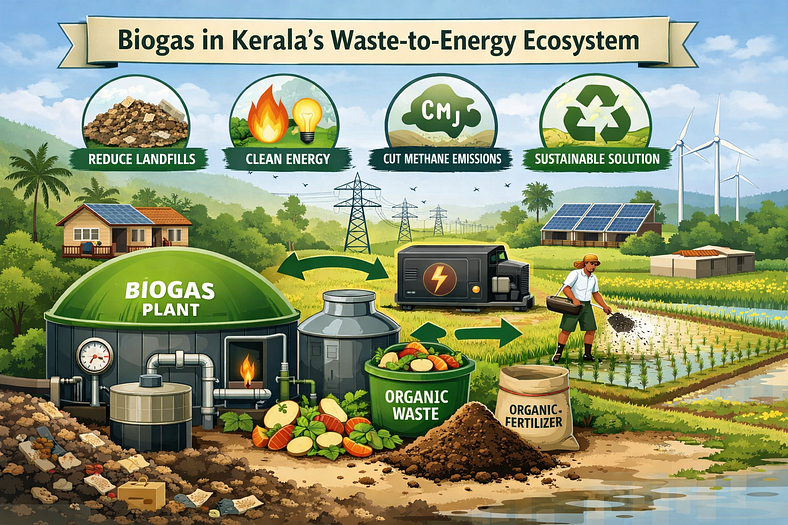
Kerala is facing a growing challenge in managing organic waste due to rapid urbanization, population growth, and limited landfill space. In this scenario, biogas in Kerala has emerged as a practical and sustainable solution that converts waste into clean energy. As part of the state’s waste-to-energy ecosystem, biogas plays a crucial role in reducing pollution, managing waste efficiently, and promoting renewable energy.
Understanding Biogas in Kerala
Biogas is a renewable form of energy produced by the anaerobic digestion of organic waste such as food scraps, kitchen waste, animal manure, and agricultural residue. In Kerala, where organic waste forms a major portion of total waste generation, biogas plants are increasingly seen as an effective waste management tool.
The government, local self-governments, and private players are actively promoting biogas in Kerala as a decentralized and eco-friendly energy solution.
Why Biogas Is Important for Kerala
Kerala’s waste management system has long depended on centralized dumping and treatment facilities, which often face public resistance and environmental concerns. Biogas plants, especially small and medium-scale units, offer a localized solution.
Key reasons why biogas in Kerala is important:
- High availability of biodegradable waste
- Limited land for large waste disposal sites
- Increasing demand for clean and renewable energy
- Strong public awareness about environmental sustainability
Role of Biogas in the Waste-to-Energy Ecosystem
1. Efficient Organic Waste Management
Biogas plants help convert kitchen waste, food waste, and agricultural waste into usable energy. This significantly reduces the amount of waste sent to landfills and dumping yards.
2. Renewable Energy Generation
Biogas in Kerala is widely used for cooking, heating, and electricity generation. It reduces dependence on LPG, firewood, and fossil fuels, making households and institutions more energy-independent.
3. Reduction in Environmental Pollution
By preventing organic waste from decomposing in open dumps, biogas plants reduce methane emissions, foul odors, and groundwater contamination.
4. Production of Organic Fertilizer
The slurry produced from biogas plants is a nutrient-rich organic fertilizer. This supports Kerala’s agricultural sector by improving soil health and reducing chemical fertilizer usage.
Applications of Biogas in Kerala
Biogas plants are successfully implemented across various sectors:
- Residential homes and apartments
- Hotels, hostels, and canteens
- Hospitals and institutions
- Poultry farms and dairy farms
- Municipal and community waste projects
These applications strengthen the role of biogas in Kerala’s waste-to-energy ecosystem by integrating waste treatment and energy production.
Government Support and Initiatives
The Kerala government actively promotes biogas through:
- Subsidies for household and community biogas plants
- Support from local self-government bodies
- Awareness programs and training initiatives
- Integration with decentralized waste management policies
- Such initiatives have accelerated the adoption of biogas in Kerala, especially at the grassroots level.
Challenges in Implementing Biogas in Kerala
Despite its benefits, biogas adoption faces certain challenges:
- Lack of technical awareness among users
- Poor maintenance of installed plants
- Space constraints in urban areas
- Initial installation costs
However, with proper design, professional maintenance, and awareness, these challenges can be effectively addressed.
Future Scope of Biogas in Kerala
The future of biogas in Kerala looks promising as the state moves towards sustainable waste management and renewable energy solutions. Innovations in compact biogas plants, community-level projects, and industrial-scale biogas systems will further strengthen Kerala’s waste-to-energy ecosystem.
With continued policy support and public participation, biogas can become a cornerstone of Kerala’s circular economy.
Conclusion
Biogas in Kerala plays a vital role in transforming organic waste into clean energy while addressing environmental and waste management challenges. As part of the waste-to-energy ecosystem, biogas offers a sustainable, cost-effective, and eco-friendly solution for households, businesses, and local bodies. Embracing biogas is not just an energy choice — it is a step toward a cleaner and greener Kerala.


Comments
Post a Comment