Biogas in Kerala: Environmental Impact and Carbon Footprint Reduction
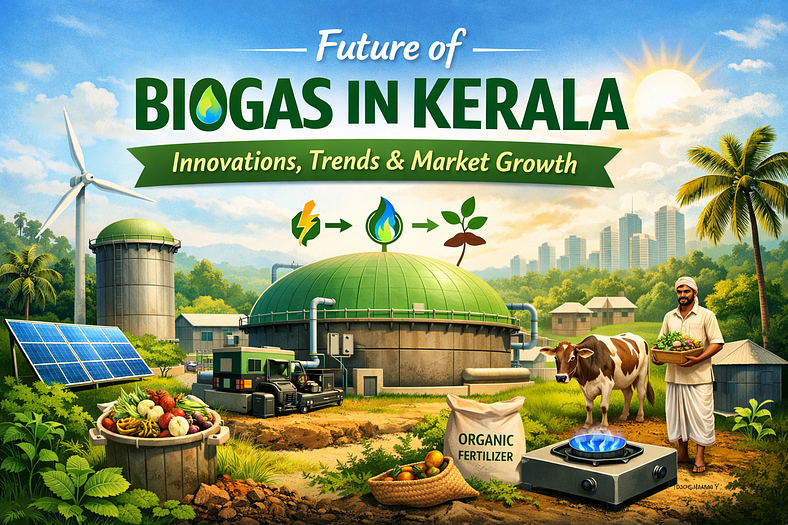
Introduction
The growing demand for renewable energy has made biogas in Kerala an essential solution for sustainable development. With increasing waste generation, rising carbon emissions, and environmental concerns, Kerala is actively seeking eco-friendly alternatives. Biogas technology plays a crucial role in reducing pollution, managing organic waste, and lowering the overall carbon footprint.
This article explores how biogas in Kerala positively impacts the environment and contributes to carbon footprint reduction.
Understanding Biogas and How It Works
Biogas is produced through anaerobic digestion, a process where organic waste such as:
- Kitchen waste
- Animal manure
- Agricultural waste
- Food processing waste
is broken down by microorganisms in the absence of oxygen. The result is methane-rich gas that can be used for cooking, electricity generation, and heating.
The by-product, known as slurry, serves as an excellent organic fertilizer.
Environmental Impact of Biogas in Kerala
1. Reduction in Organic Waste Pollution
Kerala generates a large volume of biodegradable waste daily. When dumped in landfills, this waste releases methane directly into the atmosphere — a greenhouse gas much stronger than carbon dioxide.
By converting waste into energy, biogas systems:
- Prevent landfill overflow
- Reduce foul odors
- Control pest breeding
- Minimize groundwater contamination
This makes biogas in Kerala an effective waste management solution.
2. Lower Greenhouse Gas Emissions
Methane has a global warming potential nearly 25 times greater than CO₂ over 100 years. Biogas plants capture methane and use it as fuel instead of allowing it to escape into the atmosphere.
This directly reduces:
- Greenhouse gas emissions
- Air pollution
- Climate change impact
- Biogas systems significantly lower the carbon footprint of households, farms, and institutions.
3. Reduced Dependence on Fossil Fuels
Kerala largely depends on LPG and conventional electricity sources. By adopting biogas:
- Households reduce LPG usage
- Institutions cut down electricity consumption
- Farms lower diesel dependency
This shift toward renewable energy helps decrease fossil fuel extraction and transportation emissions.
4. Promotion of Organic Farming
The slurry produced from biogas plants is rich in nutrients like nitrogen, phosphorus, and potassium.
Benefits include:
- Reduced chemical fertilizer usage
- Improved soil health
- Higher crop yield
- Reduced soil and water pollution
This supports sustainable agriculture practices across Kerala.
Carbon Footprint Reduction Through Biogas in Kerala
Carbon footprint refers to the total greenhouse gas emissions caused by an individual, organization, or activity.
Biogas helps reduce carbon footprint by:
- Capturing methane from organic waste
- Replacing LPG and fossil fuels
- Reducing transportation emissions for waste disposal
- Minimizing chemical fertilizer production emissions
- A single household biogas plant can significantly cut annual carbon emissions by replacing conventional cooking fuel.
Urban Environmental Benefits
In urban areas like Kochi, Thiruvananthapuram, and Thrissur, waste management is a major challenge. Apartment biogas systems help:
- Process daily kitchen waste on-site
- Reduce municipal waste burden
- Improve sanitation
- Promote eco-conscious living
Community-based biogas in Kerala is emerging as a strong urban sustainability solution.
Role in Kerala’s Sustainable Development Goals
Kerala has been actively promoting decentralized waste management and renewable energy adoption.
Biogas aligns with goals such as:
- Clean energy access
- Climate action
- Responsible consumption
- Sustainable cities
The expansion of biogas in Kerala directly supports long-term environmental stability.
Challenges in Maximizing Environmental Benefits
Despite its advantages, certain challenges need attention:
- Lack of awareness in rural areas
- Poor maintenance of older plants
- Initial installation cost concerns
- Technical support limitations
Addressing these issues will further enhance the environmental impact of biogas systems.
The Future Environmental Outlook
With improved technology, increased awareness, and stronger policy support, biogas in Kerala is expected to play a major role in:
- Climate change mitigation
- Zero-waste initiatives
- Carbon-neutral communities
- Sustainable rural and urban development
Biogas adoption is not just an energy solution — it is an environmental responsibility.
Conclusion
The environmental impact of biogas in Kerala is both immediate and long-term. From reducing landfill waste and greenhouse gas emissions to promoting organic farming and lowering fossil fuel dependence, biogas offers a comprehensive eco-friendly solution.
As Kerala continues moving toward a greener future, biogas stands out as a powerful tool for carbon footprint reduction and sustainable living.


Comments
Post a Comment