Biogas in Kerala for Apartments, Hotels, and Institutions
Introduction
Managing organic waste has become a major challenge across cities and towns. With increasing population density and daily waste generation, sustainable waste management solutions are essential. Biogas in Kerala is now widely adopted by apartments, hotels, and institutions as an efficient method to convert organic waste into renewable energy.
Biogas technology not only reduces waste accumulation but also produces clean cooking fuel and organic fertilizer, making it an ideal eco-friendly solution.
What is Biogas and How Does It Work?
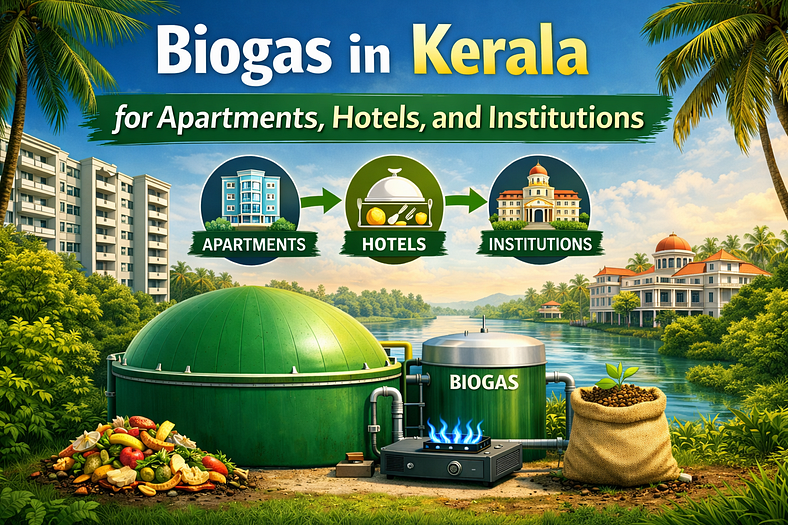
Biogas is produced through the anaerobic digestion of organic waste such as food leftovers, vegetable waste, kitchen waste, and agricultural residues. Microorganisms break down this waste in a closed chamber called a digester, producing methane-rich gas.
The process of biogas in Kerala includes:
- Collection of biodegradable waste
- Feeding waste into the biogas plant
- Microbial digestion without oxygen
- Gas generation for cooking or energy
- Organic slurry output used as fertilizer
Why Apartments Need Biogas in Kerala
Apartment complexes generate large quantities of kitchen waste daily. Transporting waste to dumping yards increases environmental pollution.
Benefits for Apartments:
- On-site waste management
- Reduced garbage disposal costs
- LPG savings for common kitchens
- Odor and pest control
- Eco-friendly residential living
Installing biogas in Kerala apartments ensures sustainable waste handling within the premises.
Biogas Solutions for Hotels and Restaurants
Hotels and restaurants produce continuous food waste, making them perfect candidates for biogas systems.
Advantages for Hotels:
- Converts food waste into cooking gas
- Reduces operational fuel expenses
- Maintains hygiene standards
Supports green certification initiatives
- Improves brand sustainability image
Many hospitality businesses now prefer biogas in Kerala to achieve responsible waste management practices.
Importance of Biogas for Institutions
Educational institutions, hospitals, hostels, and canteens generate large volumes of biodegradable waste every day.
Institutional Benefits:
- Efficient waste disposal system
- Renewable energy production
- Reduced environmental footprint
- Organic fertilizer for landscaping
- Compliance with waste management regulations
Biogas plants help institutions become environmentally responsible campuses.
Environmental Benefits of Biogas in Kerala
Adopting biogas technology contributes significantly to environmental protection:
✅ Reduction in landfill waste
✅ Lower greenhouse gas emissions
✅ Decreased dependence on fossil fuels
✅ Promotion of circular economy
✅ Sustainable urban waste management
Cost Savings and Long-Term Value
Although initial installation requires investment, biogas in Kerala offers long-term financial benefits through:
- Reduced LPG consumption
- Lower waste transportation expenses
- Minimal maintenance costs
- Government support and sustainability incentives
Conclusion
The adoption of biogas in Kerala for apartments, hotels, and institutions is transforming how organic waste is managed. By converting waste into energy and fertilizer, biogas systems create a sustainable balance between development and environmental responsibility.
Investing in biogas technology today ensures cleaner surroundings, reduced energy costs, and a greener future for Kerala.


.jpg)
Comments
Post a Comment