Biogas in Kerala: Reduce Carbon Footprint with Renewable Energy
Introduction
Kerala is known for its natural beauty, greenery, and environmental awareness. However, increasing waste generation and rising fuel dependency are major concerns. This is where biogas in Kerala plays a crucial role. By converting organic waste into clean energy, biogas helps reduce carbon emissions and supports sustainable living.
Let’s explore how biogas contributes to reducing carbon footprint and why it is becoming an essential renewable energy solution in Kerala.
What is Biogas and How Does It Work?
Biogas is produced through a process called anaerobic digestion. In this process:
- Kitchen waste
- Food waste
- Cow dung
- Agricultural waste
are decomposed in an oxygen-free environment to produce methane-rich gas.
This gas is used for:
- Cooking
- Heating
- Electricity generation
The leftover slurry acts as an organic fertilizer.
How Biogas in Kerala Reduces Carbon Footprint
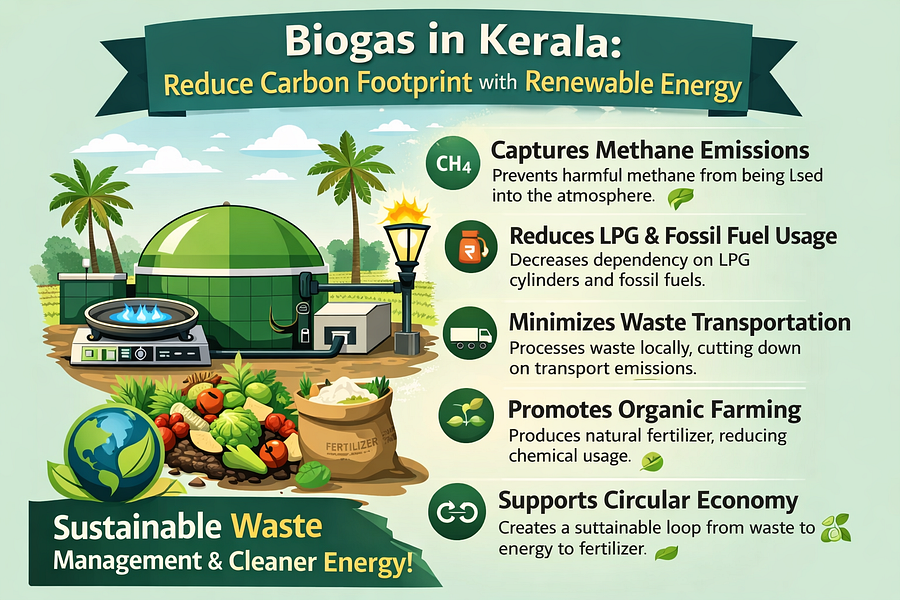
1. Captures Methane Emissions
When organic waste decomposes in open landfills, it releases methane directly into the atmosphere. Methane is far more harmful than carbon dioxide in terms of global warming potential.
Biogas plants capture this methane and use it as fuel, preventing harmful emissions.
2. Reduces LPG and Fossil Fuel Usage
By using biogas for cooking, households reduce their dependence on LPG cylinders. This decreases fossil fuel consumption and lowers carbon emissions associated with fuel production and transportation.
3. Minimizes Waste Transportation
In many areas, waste is transported long distances for disposal. This involves fuel usage and vehicle emissions.
With biogas systems installed at homes, apartments, or institutions, waste is processed at the source, reducing transportation-related carbon output.
4. Promotes Organic Farming
The slurry produced from biogas plants is a nutrient-rich organic fertilizer. This reduces the need for chemical fertilizers, which are energy-intensive to manufacture and harmful to soil health.
Kerala’s growing organic farming sector benefits significantly from this.
5. Supports Circular Economy
Biogas in Kerala promotes a circular economy model:
Waste → Energy → Fertilizer → Food Production → Waste
This closed-loop system ensures minimal environmental impact.
Benefits of Installing Biogas in Kerala
✔ Lower Energy Costs
Reduces monthly LPG expenses.
✔ Cleaner Surroundings
Eliminates foul smells and reduces waste accumulation.
✔ Sustainable Living
Encourages eco-friendly household practices.
✔ Government Support
Subsidies and renewable energy initiatives make installation more affordable.
Applications of Biogas in Kerala
Biogas systems are widely used in:
- Individual homes
- Apartments
- Hotels and restaurants
- Hostels
- Farms
- Poultry units
Large institutions generate sufficient organic waste to produce consistent energy output.
Challenges to Consider
While the benefits are clear, some challenges include:
- Initial installation cost
- Maintenance requirements
- Space limitations in urban areas
- Need for regular waste feeding
However, with proper awareness and technical support, these challenges can be managed effectively.
The Future of Renewable Energy in Kerala
Kerala’s climate conditions are ideal for biogas production. With increasing environmental awareness and government initiatives promoting renewable energy, the demand for biogas in Kerala is steadily rising.
As fuel prices continue to increase and waste management becomes more critical, biogas stands out as a practical and eco-friendly solution.
Conclusion
Biogas in Kerala is more than just an alternative cooking fuel — it is a sustainable solution to reduce carbon footprint and manage organic waste efficiently. By adopting biogas systems, households and institutions can contribute to a cleaner, greener Kerala.


Comments
Post a Comment