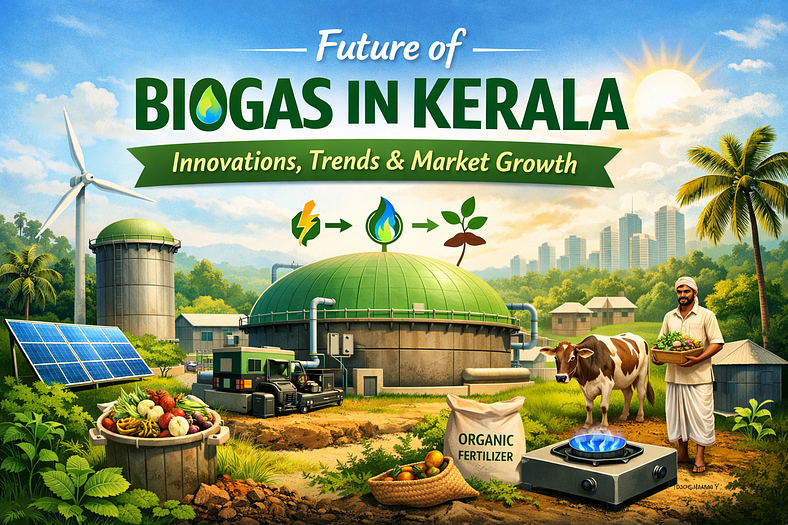
Future of Biogas in Kerala: Innovations, Trends & Market Growth
Introduction
The future of biogas in Kerala looks more promising than ever. With rising electricity costs, increasing waste generation, and growing environmental awareness, renewable energy solutions are becoming essential. Among them, biogas stands out as a practical, affordable, and eco-friendly option for households, farms, apartments, hotels, and institutions.
Kerala’s strong focus on decentralized waste management and sustainable development has created the perfect environment for biogas expansion. This article explores the innovations, emerging trends, and market growth shaping the future of biogas in Kerala.
Why Biogas in Kerala Is Gaining Momentum
Kerala produces a significant amount of organic waste daily from:
- Households
- Hotels and restaurants
- Markets
- Farms
- Apartment complexes
Improper waste disposal causes environmental pollution and health risks. Biogas systems convert this organic waste into clean cooking gas and organic fertilizer, solving two problems at once.
Key growth drivers include:
- Rising LPG prices
- Government sustainability policies
- Urban waste management challenge
- Increased environmental awareness
- Demand for energy self-sufficiency
Technological Innovations in Biogas in Kerala
Modern biogas systems are far more advanced than traditional models. Innovations are making them more efficient, compact, and user-friendly.
1. Compact Domestic Biogas Plants
New compact models are ideal for small homes and urban settings. These systems require minimal space and can process daily kitchen waste efficiently.
2. Prefabricated Biogas Units
Pre-made, easy-to-install units are becoming popular in Kerala. These reduce construction time and maintenance issues.
3. Smart Monitoring Systems
Some advanced systems now include pressure indicators and automated feeding mechanisms, improving efficiency and safety.
4. Community and Apartment Biogas Plants
Large-scale systems for flats, gated communities, and institutions are becoming a trend. These help manage bulk organic waste effectively.
Government Support for Biogas in Kerala
The growth of biogas in Kerala is strongly supported by government initiatives promoting renewable energy and waste management.
Subsidies and technical assistance programs encourage:
- Household biogas installations
- Community waste-to-energy projects
- Agricultural biogas units
Local self-governments and renewable energy agencies continue promoting decentralized waste solutions, which directly boosts the biogas market.
Market Growth of Biogas in Kerala
The biogas market in Kerala is expanding rapidly due to:
- Increased demand from residential users
- Commercial sector adoption (hotels, hostels, hospitals)
- Agricultural sector interest
- Sustainability mandates in urban areas
Many private manufacturers and renewable energy companies are entering the market, offering customized biogas solutions.
As awareness grows, the demand for biogas in Kerala is expected to increase steadily over the next decade.
Environmental Benefits Driving the Future
Biogas in Kerala plays a major role in:
- Reducing landfill waste
- Lowering methane emissions
- Cutting dependence on fossil fuels
- Promoting organic farming through slurry fertilizer
With climate change concerns rising, eco-friendly solutions like biogas are becoming essential for long-term sustainability.
Economic Advantages of Biogas in Kerala
Biogas is not only environmentally beneficial but also financially smart.
Cost Savings
- Reduced LPG expenses
- Lower waste disposal costs
- Reduced electricity bills (in larger plants)
Additional Income
- Organic slurry can be used as fertilizer
- Farmers can improve crop yields
- Commercial plants can generate revenue through waste processing
Long-term ROI makes biogas in Kerala a highly attractive investment.
Challenges Facing Biogas in Kerala
Despite growth, some challenges remain:
- Lack of awareness in rural areas
- Initial installation cost concerns
- Improper maintenance of older plants
- Technical knowledge gaps
However, with better training, improved technology, and awareness campaigns, these challenges are gradually being addressed.
Future Trends to Watch
The next phase of biogas in Kerala will likely include:
- Integration with solar energy systems
- Large-scale municipal biogas projects
- Waste-to-electricity conversion plants
- Increased private sector participation
- Carbon credit opportunities
Kerala’s strong environmental policies and educated population make it one of the most promising states for biogas expansion in India.
Conclusion
The future of biogas in Kerala is bright, innovative, and full of opportunity. With advancements in technology, strong government backing, and growing environmental awareness, biogas is set to become a mainstream renewable energy solution across the state.
For homeowners, farmers, apartment associations, and businesses, investing in biogas today means securing energy independence, reducing waste, and contributing to a cleaner Kerala tomorrow.


Comments
Post a Comment