How Biogas in Kerala Contributes to Carbon Footprint Reduction
Introduction
Climate change is one of the biggest global challenges today. Rising temperatures, unpredictable rainfall, and extreme weather conditions are clear signs that reducing carbon emissions is urgent. In this context, biogas in Kerala is emerging as a powerful solution to reduce carbon footprint while solving waste management problems.
Kerala, known for its high population density and large volume of organic waste, is increasingly adopting biogas technology as a sustainable energy alternative. This article explains how biogas in Kerala contributes significantly to carbon footprint reduction and supports environmental sustainability.
What Is Biogas?
Biogas is a renewable energy source produced through the anaerobic digestion of organic waste such as:
- Food waste
- Kitchen scraps
- Agricultural residues
- Animal manure
- Organic market waste
- The process produces methane-rich gas that can be used for cooking, electricity generation, and heating. The leftover slurry can be used as organic fertilizer.
Why Carbon Footprint Reduction Is Important in Kerala
Kerala faces several environmental challenges:
- Increasing waste generation
- Limited landfill space
- Dependence on LPG and fossil fuels
- Rising greenhouse gas emissions
- Improper waste disposal releases methane into the atmosphere — a greenhouse gas that is 25 times more potent than carbon dioxide. By implementing biogas in Kerala, methane is captured and used as fuel instead of being released into the atmosphere.
7 Ways Biogas in Kerala Reduces Carbon Footprint
1. Reduces Methane Emissions from Waste
When organic waste decomposes in landfills, it releases methane directly into the atmosphere. Biogas plants capture this methane and convert it into usable energy. This significantly lowers greenhouse gas emissions.
2. Replaces Fossil Fuels Like LPG
Many households and commercial kitchens in Kerala rely heavily on LPG cylinders. Biogas in Kerala offers a clean alternative, reducing dependence on fossil fuels and lowering carbon emissions.
3. Minimizes Transportation Emissions
Transporting waste to dumping yards requires fuel consumption. Installing decentralized biogas plants at homes, apartments, hotels, and markets reduces waste transportation needs, cutting down fuel-related emissions.
4. Produces Organic Fertilizer
Chemical fertilizers have a high carbon footprint due to manufacturing and transportation. The slurry from biogas plants acts as a natural fertilizer, reducing the need for synthetic fertilizers.
5. Supports Circular Economy
Biogas in Kerala promotes a circular economy model:
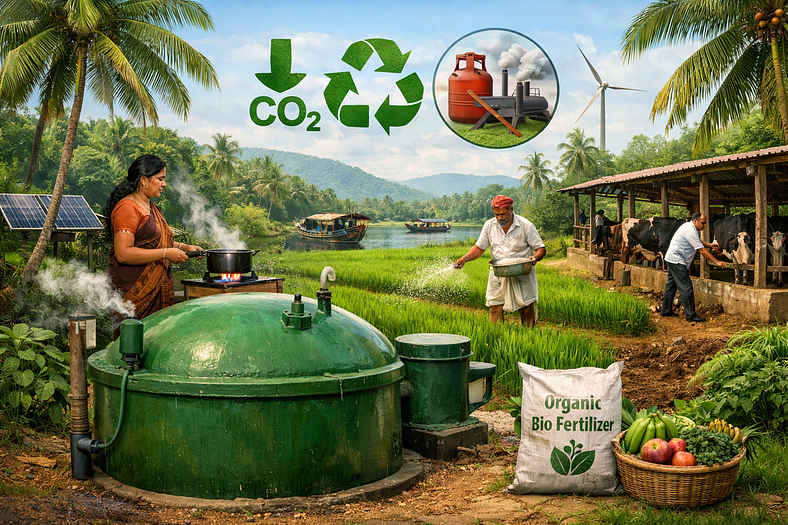
Waste → Energy → Fertilizer → Agriculture → Food → Waste
This closed-loop system reduces environmental impact and maximizes resource efficiency.
6. Reduces Landfill Usage
Less organic waste in landfills means lower methane production and reduced soil and groundwater contamination.
7. Encourages Sustainable Urban Living
Urban households and apartment complexes installing biogas systems promote responsible waste management and sustainable living practices.
Residential Impact of Biogas in Kerala
Households in Kerala generate significant kitchen waste daily. Installing a small domestic biogas plant:
- Reduces daily waste volume
- Saves money on LPG
- Provides free organic manure
- Lowers household carbon emissions
- Over time, widespread adoption of biogas in Kerala can create measurable environmental benefits.
Commercial and Agricultural Impact
Hotels & Restaurants
Large-scale food waste can be converted into cooking gas, reducing operational costs and carbon emissions.
Farms
Animal manure and agricultural waste can generate biogas for farm operations while producing nutrient-rich fertilizer.
Markets & Institutions
Vegetable markets and hostels generate tons of organic waste daily, making them ideal for biogas implementation.
Government Support for Biogas in Kerala
The Kerala government and various agencies promote biogas adoption through:
- Subsidies
- Technical support
- Awareness programs
- Waste management initiatives
These initiatives make biogas in Kerala more affordable and accessible for households and businesses.
Long-Term Environmental Benefits
Adopting biogas technology on a large scale in Kerala can:
- Reduce greenhouse gas emissions
- Improve air quality
- Decrease landfill dependency
- Promote renewable energy usage
- Support climate change mitigation goals
If more communities invest in biogas in Kerala, the state can become a model for sustainable waste-to-energy solutions.
Challenges to Overcome
While biogas in Kerala has huge potential, some challenges remain:
- Initial installation cost
- Lack of awareness
- Maintenance concerns
- Space limitations in urban areas
- However, technological advancements and government incentives are gradually addressing these issues.
Future Scope of Biogas in Kerala
With increasing environmental awareness and strict waste management policies, the future of biogas in Kerala looks promising. Smart cities, eco-friendly apartments, and sustainable farming practices are expected to boost demand further.
The shift toward renewable energy is not just an option — it is a necessity.
Conclusion
Biogas in Kerala plays a vital role in reducing carbon footprint by capturing methane emissions, replacing fossil fuels, minimizing waste transportation, and promoting organic agriculture. It provides a practical and eco-friendly solution to Kerala’s growing waste and energy challenges.
Investing in biogas is not just about energy savings — it is about building a cleaner, greener, and more sustainable future.


.jpg)
Comments
Post a Comment