How Biogas in Kerala Supports a Zero-Waste Lifestyle
Introduction
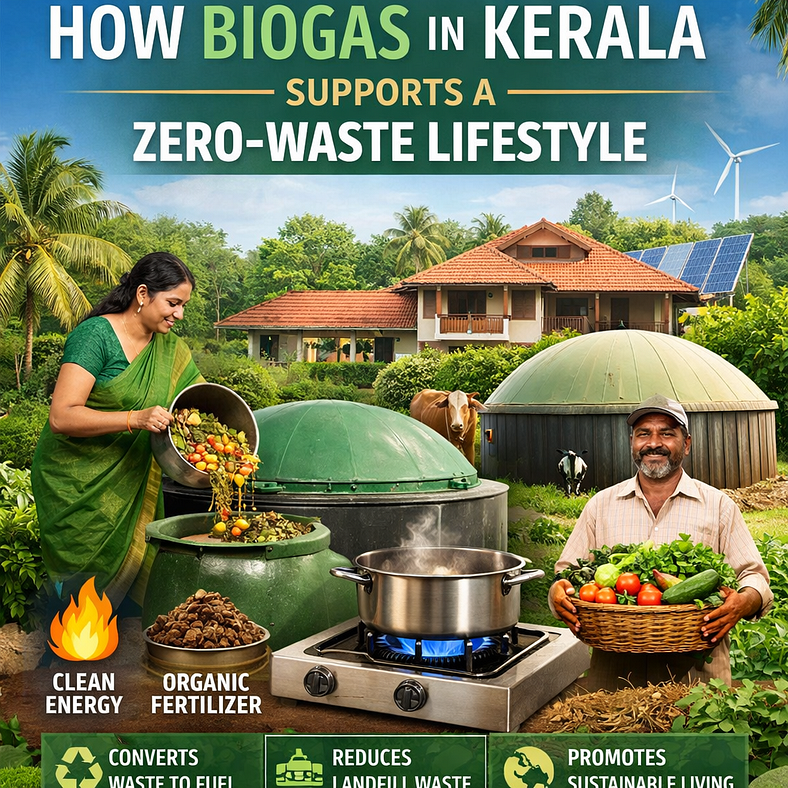
Waste management has become one of the biggest environmental challenges in Kerala. With increasing population density and urbanization, managing organic waste efficiently is critical. This is where biogas in Kerala plays a transformative role. By converting kitchen and organic waste into usable cooking gas and organic fertilizer, biogas systems promote a sustainable and zero-waste lifestyle.
Kerala’s strong environmental awareness and decentralized waste management initiatives make biogas an ideal solution for households, apartments, institutions, and farms.
What Is Biogas?
Biogas is a renewable energy source produced through the anaerobic digestion of organic waste such as:
- Kitchen waste
- Vegetable peels
- Food leftovers
- Cow dung
- Agricultural waste
The decomposition process generates methane gas, which can be used for cooking and heating. The leftover slurry becomes nutrient-rich organic manure.
Why Biogas in Kerala Is Perfect for a Zero-Waste Lifestyle
1️⃣ Reduces Household Waste
In Kerala, a large percentage of daily waste is organic. Installing a domestic biogas plant reduces the amount of waste sent to landfills by up to 60–70%.
This helps:
- Prevent landfill overflow
- Reduce foul odors
- Avoid pest infestations
- Improve community hygiene
2️⃣ Converts Waste into Clean Energy
Instead of discarding food waste, biogas systems transform it into cooking gas. This reduces dependency on LPG cylinders and supports renewable energy usage.
Many households in Kerala now use biogas as a primary or supplementary cooking fuel.
3️⃣ Produces Organic Fertilizer
The slurry generated after gas production acts as an excellent organic fertilizer. It improves soil fertility and reduces chemical fertilizer usage.
This is especially beneficial for:
- Home gardens
- Terrace farming
- Vegetable cultivation
- Small-scale farming
4️⃣ Reduces Carbon Footprint
Biogas in Kerala significantly reduces greenhouse gas emissions. When organic waste decomposes in open dumps, it releases methane into the atmosphere. Biogas systems capture this methane and use it as fuel, preventing environmental damage.
This directly supports climate-friendly living.
5️⃣ Supports Government Waste Management Policies
Kerala promotes decentralized waste management. Local self-governments and organizations encourage households to adopt biogas plants to reduce pressure on municipal waste systems.
Several subsidy schemes are available to make installation affordable.
Types of Biogas Plants in Kerala
🏠 Domestic Biogas Plants
Ideal for individual houses. Compact and easy to maintain.
🏢 Apartment Biogas Systems
Suitable for flats and residential complexes.
🌾 Community Biogas Plants
Installed in villages, hostels, or institutions.
🚜 Agricultural Biogas Units
Used in farms and dairy units for large-scale energy generation.
Cost of Installing Biogas in Kerala
The cost depends on capacity and model. On average:
- Small domestic units: ₹15,000 — ₹35,000
- Medium capacity units: ₹35,000 — ₹75,000
- Large systems: ₹1 lakh and above
Subsidies from local bodies can significantly reduce the cost.
Maintenance and Operation
Biogas systems require:
- Daily feeding of organic waste
- Occasional stirring
- Proper water balance
- Regular outlet cleaning
- Maintenance is simple and cost-effective compared to other waste management systems.
Challenges of Biogas in Kerala
While biogas offers many benefits, some challenges include:
- Initial installation cost
- Lack of awareness in rural areas
- Improper maintenance in some cases
- Space limitations in urban homes
However, with proper guidance and support, these issues can be easily managed.
Future of Biogas in Kerala
With growing environmental awareness and stricter waste management regulations, the demand for biogas in Kerala is increasing. Schools, hotels, hospitals, and local governments are adopting biogas solutions to promote sustainable waste management.
Biogas plays a key role in Kerala’s transition toward renewable energy and a zero-waste future.
Conclusion
Biogas in Kerala is more than just an alternative fuel solution — it is a practical step toward achieving a zero-waste lifestyle. By converting kitchen waste into clean energy and organic fertilizer, households can reduce waste, lower energy costs, and protect the environment.
Adopting biogas is not just an eco-friendly choice but a smart investment for a cleaner and greener Kerala.


Comments
Post a Comment