Incinerators in Kerala — A Modern Solution for Waste Management
Introduction
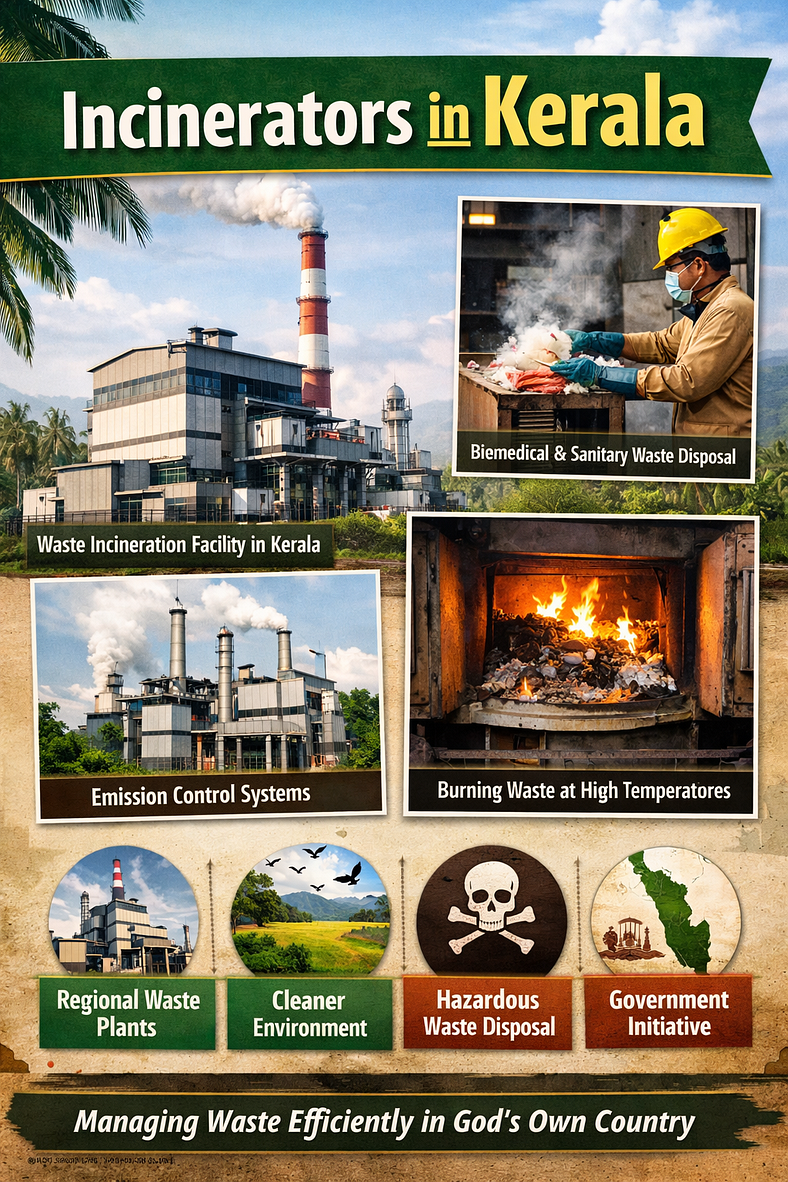
Waste management has become a major environmental concern in Kerala due to population growth, urbanization, and increased consumption. One of the most effective and scientifically approved methods of managing hazardous and non-biodegradable waste is through incineration. Incinerators in Kerala are increasingly used in hospitals, industries, municipalities, and institutions to safely dispose of waste while minimizing environmental risks.
What Is an Incinerator?
An incinerator is a specialized machine that burns waste at extremely high temperatures, usually between 800°C and 1200°C, reducing waste volume by up to 90%. This process destroys harmful bacteria, viruses, and toxic materials, making it a safe disposal method for hazardous waste.
Incinerators are commonly used for:
- Biomedical waste (hospital waste, surgical materials)
- Sanitary waste (diapers, sanitary napkins)
- Industrial waste
- Municipal solid waste
- Animal and agricultural waste
Importance of Incinerators in Kerala
Kerala generates large amounts of waste daily due to its high population density and healthcare infrastructure. Incinerators play a crucial role in maintaining hygiene and protecting public health.
Key Benefits:
- Safe disposal of hazardous waste
Incinerators eliminate infectious and dangerous waste from hospitals and laboratories. - Reduction in waste volume
Waste volume can be reduced by up to 90%, making disposal easier and more efficient. - Prevention of environmental pollution
Proper incineration prevents soil and groundwater contamination caused by improper waste dumping. - Supports sanitation and cleanliness initiatives
Incinerators support government projects aimed at making Kerala cleaner and waste-free. - Energy recovery potential
Some modern incinerators can convert waste into usable energy, contributing to sustainable development.
Types of Incinerators Used in Kerala
1. Biomedical Waste Incinerators
Used in hospitals, clinics, and laboratories to destroy infectious waste such as gloves, syringes, and surgical materials.
2. Sanitary Napkin Incinerators
Installed in schools, offices, and public places for safe disposal of sanitary products.
3. Municipal Waste Incinerators
Used by municipalities to manage non-recyclable solid waste.
4. Industrial Waste Incinerators
Used in factories to dispose of hazardous industrial waste safely.
5. Domestic and Small-Scale Incinerators
Used in apartments, institutions, and rural areas for localized waste management.
Government Initiatives and Waste Management Projects
The Kerala government has introduced several waste management programs that include installing modern incinerators across districts. These projects focus on:
- Scientific waste disposal
- Reducing landfill dependency
- Improving sanitation infrastructure
- Promoting eco-friendly waste treatment
Advanced dual-chamber incinerators are being adopted to reduce harmful emissions and improve efficiency.
Environmental Considerations
Modern incinerators in Kerala are equipped with pollution control systems such as:
- Air scrubbers
- Filters
- Emission control chambers
- These technologies reduce harmful emissions and ensure compliance with environmental safety standards.
Future of Incinerators in Kerala
With increasing awareness and stricter environmental regulations, the demand for incinerators in Kerala is expected to grow. Industries, hospitals, and municipalities are investing in advanced incineration systems to ensure safe and sustainable waste disposal.
This growth supports Kerala’s vision of becoming a cleaner, healthier, and environmentally responsible state.
Conclusion
Incinerators in Kerala are an essential part of modern waste management. They help safely dispose of hazardous waste, protect public health, and support environmental sustainability. With continued technological advancements and government support, incinerators will play a crucial role in Kerala’s future waste management strategy.


Comments
Post a Comment