Biogas in Kerala: 2026 Trends Driving Green Energy Growth
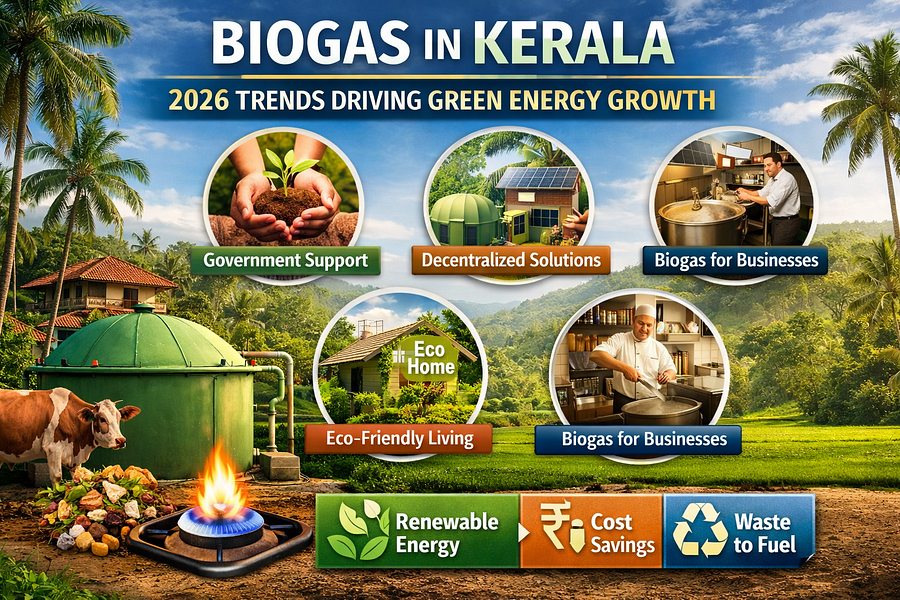
As sustainability becomes a global priority, Kerala is emerging as a leader in eco-friendly waste management. One of the most promising solutions gaining momentum is biogas in Kerala. In 2026, this renewable energy source is not just an alternative — it’s becoming a necessity for households, businesses, and municipalities.
What is Biogas and Why It Matters in 2026
Biogas is a renewable energy produced by the breakdown of organic waste such as food scraps, agricultural residue, and animal waste. With rising waste generation and energy demands, biogas offers a dual benefit:
- Efficient waste management
- Clean energy production
In a densely populated state like Kerala, where waste disposal is a major concern, biogas systems are becoming increasingly relevant.
Key Trends Driving Biogas Growth in Kerala (2026)
1. Government Support & Policies
The Kerala government continues to actively promote biogas through subsidies and awareness programs. Local self-governments are encouraging households and institutions to install small-scale biogas plants to reduce landfill dependency.
2. Shift Towards Decentralized Waste Management
Centralized waste systems are no longer enough. In 2026, Kerala is focusing on decentralized solutions, where waste is treated at the source. Biogas plants in homes, apartments, and commercial establishments are playing a crucial role.
3. Rising Demand for Sustainable Living
People are becoming more environmentally conscious. The demand for eco-friendly homes and green certifications is increasing, making biogas systems a valuable addition to modern living spaces.
4. Cost Savings and ROI Awareness
With increasing electricity and LPG costs, many households are turning to biogas as a cost-effective solution. Over time, biogas systems offer:
- Reduced cooking fuel expenses
- Lower waste disposal costs
- Long-term financial savings
5. Adoption by Businesses and Institutions
Hotels, restaurants, and hospitals are among the biggest contributors to organic waste. In 2026, many businesses in Kerala are installing biogas plants to:
- Manage waste efficiently
- Reduce operational costs
- Improve sustainability branding
Benefits of Biogas in Kerala
Environmental Benefits
- Reduces landfill waste
- Lowers greenhouse gas emissions
- Promotes cleaner surroundings
Economic Benefits
- Cuts down on fuel expenses
- Low maintenance costs
- Government incentives available
Social Benefits
- Creates awareness about waste segregation
- Encourages community-level sustainability
- Improves public health and sanitation
Challenges Still Facing Biogas Adoption
Despite rapid growth, some challenges remain:
- Lack of awareness in rural areas
- Improper maintenance of systems
- Initial installation cost concerns
However, with increasing education and technological advancements, these barriers are gradually being overcome.
Future of Biogas in Kerala
The future of biogas in Kerala looks promising in 2026 and beyond. With continuous innovation, government backing, and public participation, biogas is set to become a mainstream energy solution.
From individual households to large-scale industries, Kerala is steadily moving towards a zero-waste, energy-efficient future.
Conclusion
Biogas is no longer just an alternative — it’s a smart, sustainable choice for modern living. As 2026 unfolds, the growth of biogas in Kerala reflects a larger shift towards clean energy and responsible waste management


.jpg)
Comments
Post a Comment