Biogas in Kerala: From Waste Disposal to Renewable Energy
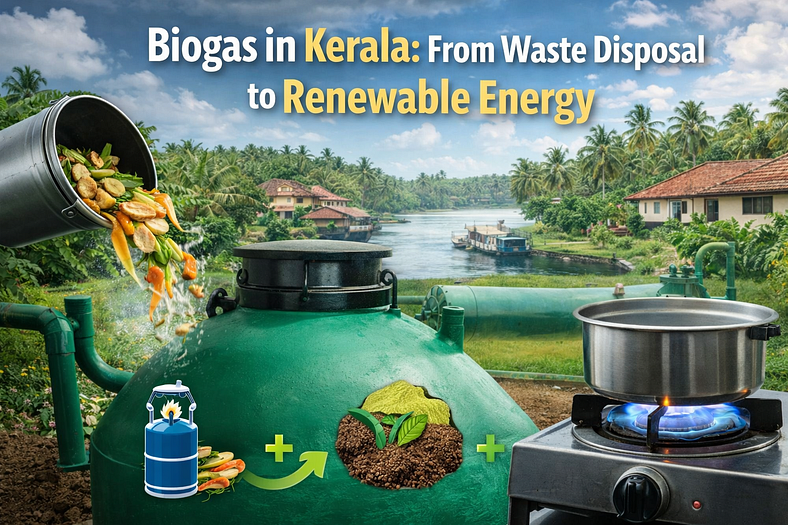
Kerala is widely known for its natural beauty, dense population, and increasing focus on sustainable living. However, managing organic waste has become a major challenge for households, institutions, and local authorities. With the growing concern about waste disposal and environmental pollution, biogas in Kerala has emerged as an effective and eco-friendly solution that converts organic waste into renewable energy.
Biogas technology not only helps in managing waste efficiently but also provides a clean and sustainable source of energy for cooking and other purposes. As awareness about environmental protection increases, more people across Kerala are adopting biogas systems.
Understanding Biogas Technology
Biogas is produced through the natural breakdown of organic materials such as food waste, vegetable scraps, agricultural residues, and animal waste in an oxygen-free environment. This process is known as anaerobic digestion.
During this process, microorganisms break down organic matter and release a mixture of gases mainly consisting of methane and carbon dioxide. The methane gas produced can be used as a clean fuel for cooking, heating, or even generating electricity.
This simple yet effective technology has made biogas in Kerala an increasingly popular solution for waste management and energy generation.
The Growing Need for Waste Management in Kerala
Kerala generates a significant amount of organic waste every day from households, hotels, markets, and farms. Improper disposal of waste often leads to environmental pollution, foul odors, and health hazards.
Biogas plants offer a practical solution by converting kitchen and food waste into usable energy. Instead of sending waste to landfills or dumping sites, biogas systems recycle the waste and produce valuable fuel.
This approach supports the state’s efforts to promote sustainable waste management practices.
Benefits of Biogas in Kerala
The adoption of biogas in Kerala provides multiple environmental and economic benefits.
1. Efficient Waste Management
Biogas plants help reduce the volume of organic waste that ends up in landfills. This minimizes pollution and improves overall waste management efficiency.
2. Renewable Energy Source
Biogas is a renewable and sustainable form of energy. Unlike fossil fuels, it can be produced continuously from organic waste.
3. Reduction in Carbon Emissions
Biogas systems reduce greenhouse gas emissions by capturing methane that would otherwise be released into the atmosphere.
4. Cost Savings
Households and institutions using biogas can significantly reduce their dependence on LPG cylinders or other cooking fuels.
5. Production of Organic Fertilizer
The by-product of the biogas production process is a nutrient-rich slurry that can be used as organic fertilizer for agriculture and gardening.
Applications of Biogas Systems
Biogas plants are highly versatile and can be used in various settings.
Residential Homes — Many households in Kerala install small biogas units to process kitchen waste and generate cooking gas.
Hotels and Restaurants — Food establishments produce large amounts of organic waste daily, making biogas plants an ideal waste management solution.
Agricultural Farms — Farms can use animal waste and agricultural residues to produce biogas and fertilizer.
Institutions and Communities — Schools, hostels, hospitals, and community centers can install larger biogas plants to manage waste efficiently.
Government Support and Awareness
The government and local bodies in Kerala have been actively promoting the use of biogas systems. Various awareness programs, subsidies, and incentives have been introduced to encourage households and businesses to adopt biogas technology.
These initiatives aim to reduce the burden on waste management systems and promote the use of renewable energy sources across the state.
Challenges and Opportunities
Although biogas in Kerala is gaining popularity, there are still some challenges such as lack of awareness, maintenance concerns, and initial installation costs.
However, with increasing environmental awareness and technological improvements, biogas systems are becoming more efficient and accessible. The growing interest in sustainable living and waste management solutions is expected to drive the expansion of biogas technology in the coming years.
Conclusion
Biogas technology offers a powerful solution to two major challenges: waste disposal and energy generation. By converting organic waste into renewable fuel, biogas in Kerala supports sustainable development and environmental protection.
As more households, businesses, and institutions adopt this eco-friendly technology, Kerala can move closer to a cleaner environment and a more sustainable energy future.


Comments
Post a Comment