Biogas in Kerala: A Practical Approach to Organic Waste Recycling
Introduction
Managing organic waste has become a major challenge in modern society. With increasing population and urbanization, the amount of kitchen waste, agricultural waste, and biodegradable materials is growing rapidly. Biogas in Kerala has emerged as an effective and sustainable solution to address this problem. By converting organic waste into energy, biogas technology helps reduce environmental pollution while producing a valuable renewable fuel.
What is Biogas?
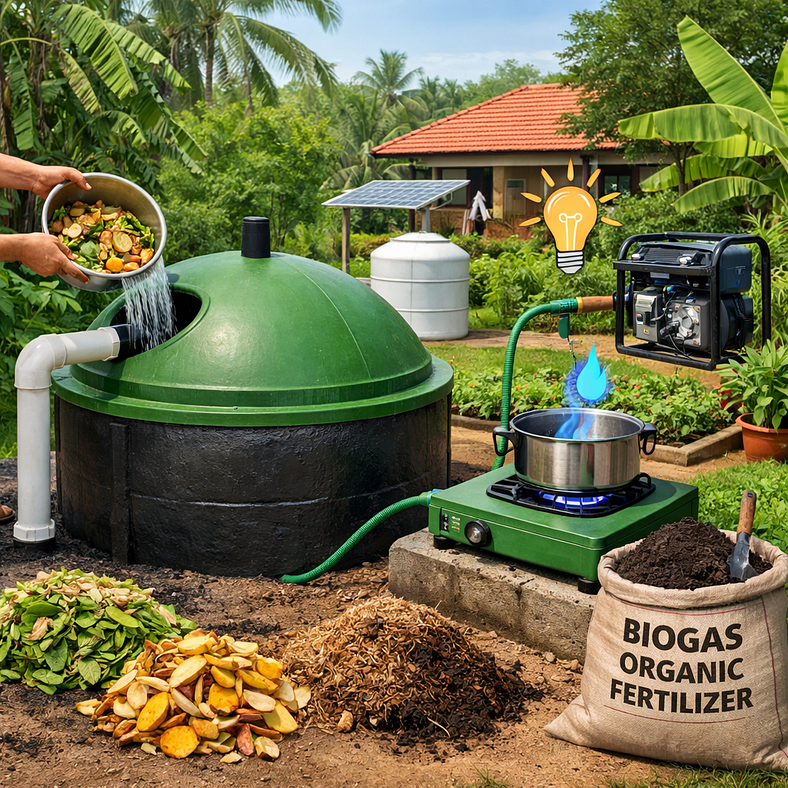
Biogas is a renewable energy source produced through the anaerobic digestion of organic waste such as food scraps, animal manure, and agricultural residues. In this process, microorganisms break down biodegradable materials in the absence of oxygen, producing a mixture of gases mainly consisting of methane and carbon dioxide.
This gas can be used for:
- Cooking
- Electricity generation
- Heating
- Lighting
At the same time, the by-product of the process is a nutrient-rich organic fertilizer that can be used in agriculture.
Importance of Biogas in Kerala
Kerala generates a significant amount of organic waste every day from households, hotels, markets, and farms. Improper waste disposal often leads to environmental issues such as bad odor, groundwater contamination, and increased landfill waste.
Biogas in Kerala plays a crucial role in solving these problems by converting waste into useful energy. Small household plants and larger community biogas systems are becoming increasingly popular across the state.
Benefits of Biogas in Kerala
1. Effective Waste Management
Biogas plants help manage kitchen waste and organic waste efficiently. Instead of dumping waste in landfills, it can be converted into energy.
2. Renewable Energy Source
Biogas provides a sustainable alternative to LPG and other fossil fuels. It reduces dependence on non-renewable energy sources.
3. Environmental Protection
Biogas systems reduce methane emissions from decomposing waste and help control pollution. This contributes to a cleaner and greener environment.
4. Cost Savings
Households and businesses using biogas plants can save money on cooking gas and waste disposal costs.
5. Organic Fertilizer Production
The slurry produced from biogas plants is rich in nutrients and can be used as an eco-friendly fertilizer for farming and gardening.
Applications of Biogas in Kerala
Biogas technology can be used in various sectors across Kerala:
Households: Small biogas plants for kitchen waste.
Hotels and Restaurants: Managing large quantities of food waste.
Farms: Utilizing animal waste to generate energy.
Institutions and Markets: Handling large-scale organic waste efficiently.
Government Support and Awareness
The government and local bodies in Kerala actively promote biogas plants through awareness programs and subsidies. Many municipalities encourage households and businesses to install biogas units as part of sustainable waste management initiatives.
Future Potential of Biogas in Kerala
With increasing environmental awareness and the need for sustainable waste solutions, the future of biogas in Kerala looks promising. More households, institutions, and industries are adopting biogas technology to reduce waste and generate renewable energy.
Innovations in biogas plant design and improved waste management policies will further support the growth of this eco-friendly solution.
Conclusion
Biogas in Kerala offers a practical and sustainable approach to organic waste recycling. By transforming biodegradable waste into renewable energy and organic fertilizer, biogas technology helps reduce pollution, manage waste efficiently, and support a greener future. As awareness continues to grow, biogas systems are expected to play an even bigger role in Kerala’s journey toward sustainable living.


.jpg)
Comments
Post a Comment