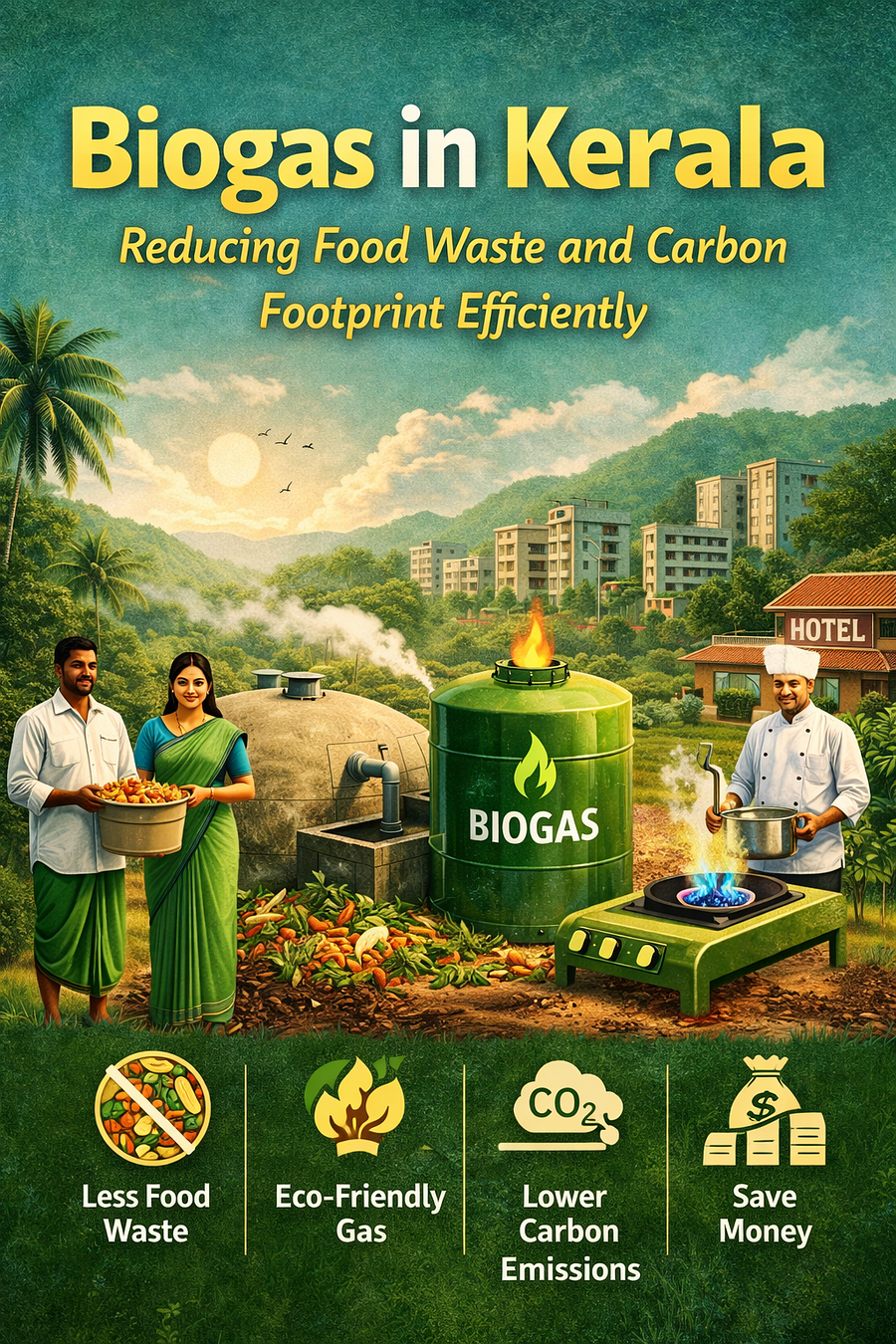
Biogas in Kerala: Reducing Food Waste and Carbon Footprint Efficiently
Introduction
Kerala is facing increasing challenges related to waste management and environmental sustainability. With rising food waste from households, hotels, restaurants, and institutions, adopting renewable solutions has become essential. Biogas in Kerala is emerging as an effective method to manage organic waste while producing clean and sustainable energy.
Biogas technology converts food and biodegradable waste into usable fuel, helping reduce pollution and carbon emissions while promoting eco-friendly living.
Understanding Biogas Technology
Biogas is produced through the anaerobic digestion process, where microorganisms break down organic waste in the absence of oxygen. The process generates methane-rich gas that can be used for cooking, heating, and electricity generation.
Common materials used in biogas in Kerala systems include:
- Food waste
- Vegetable and fruit waste
- Agricultural residue
- Animal manure
- Kitchen waste
This system transforms waste into energy and organic fertilizer, creating a sustainable waste cycle.
Food Waste Challenges in Kerala
Kerala generates tons of food waste every day due to:
- Growing urban population
- Tourism and hospitality industries
- Restaurants and catering services
- Residential apartments and communities
Improper disposal leads to landfill overflow, foul odors, and greenhouse gas emissions. Implementing biogas in Kerala helps tackle these challenges efficiently by processing waste at the source.
How Biogas Helps Reduce Carbon Footprint
Biogas plants significantly reduce environmental impact by:
- Preventing methane release from open dumping
- Reducing dependence on LPG and fossil fuels
- Lowering transportation of waste to landfills
- Minimizing air and water pollution
Using biogas in Kerala directly supports climate-friendly waste management practices.
Benefits for Homes and Businesses
Residential Benefits
- Converts kitchen waste into cooking gas
- Reduces household waste volume
- Produces organic manure for gardens
- Saves monthly fuel expenses
Commercial Benefits
Hotels, hostels, and institutions benefit through:
- Reduced waste disposal costs
- Sustainable energy generation
- Improved environmental compliance
- Positive eco-friendly brand image
Economic Advantages of Biogas Systems
Installing biogas in Kerala offers long-term financial benefits:
- Lower LPG consumption
- Reduced waste handling expenses
- Government subsidy support
- Minimal operational costs
- Faster return on investment
Businesses generating large amounts of food waste can achieve significant savings annually.
Supporting Kerala’s Sustainable Future
Kerala’s focus on decentralized waste management makes biogas an ideal solution for cities and rural areas alike. Schools, apartments, farms, and commercial establishments are increasingly adopting biogas plants to meet sustainability goals.
Biogas systems contribute to:
- Clean energy production
- Waste-to-resource conversion
- Circular economy development
- Environmental protection
Conclusion
The adoption of biogas in Kerala plays a vital role in reducing food waste and carbon footprint efficiently. By converting organic waste into renewable energy, biogas technology supports both environmental sustainability and economic savings.
Investing in biogas solutions today ensures cleaner surroundings, reduced emissions, and a greener future for Kerala.


Comments
Post a Comment