Biogas in Thrissur: How It Helps Reduce Waste and Protect the Environment
Introduction
Waste management has become a growing concern in many cities, including Thrissur. With increasing population and urban activities, the amount of organic waste generated from households, restaurants, and markets continues to rise. Biogas in Thrissur has emerged as an effective and eco-friendly solution to address this issue. By converting organic waste into useful energy, biogas technology helps reduce waste while protecting the environment.
What is Biogas?
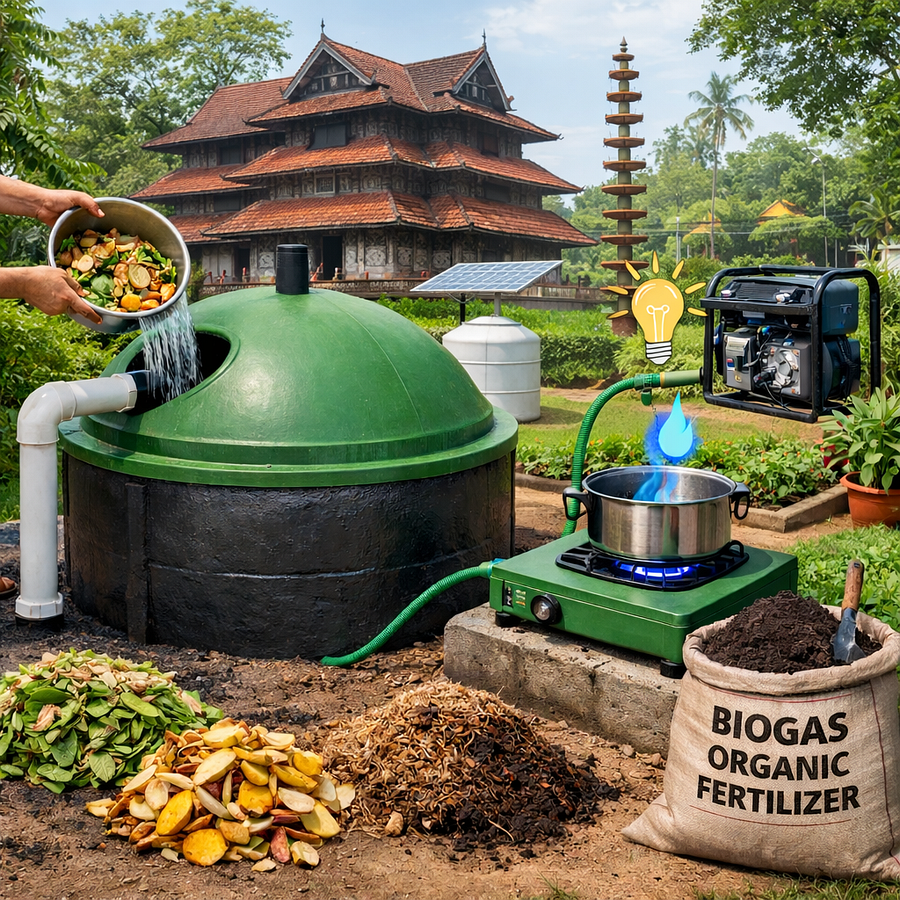
Biogas is a renewable energy source produced by the anaerobic digestion of organic materials such as kitchen waste, food scraps, vegetable waste, and animal manure. In this natural process, microorganisms break down biodegradable waste in the absence of oxygen, producing a gas mixture mainly composed of methane and carbon dioxide.
This gas can be used for:
- Cooking
- Electricity generation
- Heating
- Lighting
Additionally, the residue left after the process can be used as a nutrient-rich organic fertilizer for farming and gardening.
Importance of Biogas in Thrissur
Thrissur, known as the cultural capital of Kerala, generates a significant amount of biodegradable waste every day. Improper waste disposal can lead to pollution, foul odors, and environmental damage. Biogas in Thrissur provides a practical solution by converting organic waste into renewable energy.
Many households, institutions, hotels, and farms are adopting biogas plants to manage waste efficiently and reduce their environmental impact.
Benefits of Biogas in Thrissur
1. Effective Waste Management
Biogas plants help convert kitchen and organic waste into useful energy, reducing the burden on waste disposal systems.
2. Eco-Friendly Energy Source
Biogas is a clean and renewable fuel that reduces dependence on LPG and other fossil fuels.
3. Environmental Protection
Biogas systems reduce greenhouse gas emissions and prevent organic waste from decomposing in landfills, which helps protect the environment.
4. Cost Savings
By producing cooking gas from waste, households and businesses can reduce their fuel expenses.
5. Organic Fertilizer Production
The slurry produced during the biogas process is rich in nutrients and can be used as natural fertilizer for agriculture and gardening.
Applications of Biogas in Thrissur
Biogas technology can be used in various sectors in Thrissur, including:
Households: Small biogas plants for kitchen waste management.
Hotels and Restaurants: Handling large amounts of food waste.
Farms: Utilizing animal waste to produce renewable energy.
Markets and Institutions: Managing large-scale organic waste effectively.
Future of Biogas in Thrissur
With growing awareness about sustainability and environmental protection, the demand for biogas in Thrissur is steadily increasing. Government initiatives and waste management programs are encouraging households and businesses to install biogas systems.
As technology improves and awareness spreads, biogas is expected to play a vital role in creating a cleaner and greener Thrissur.
Conclusion
Biogas in Thrissur is a practical and sustainable solution for managing organic waste and producing renewable energy. By converting biodegradable waste into valuable resources, biogas technology helps reduce pollution, save costs, and protect the environment. Adopting biogas systems can significantly contribute to building a sustainable and eco-friendly future for Thrissur.


.jpg)
Comments
Post a Comment