Biogas in Kerala: Can Temple Waste Become the State’s Next Green Energy Revolution?
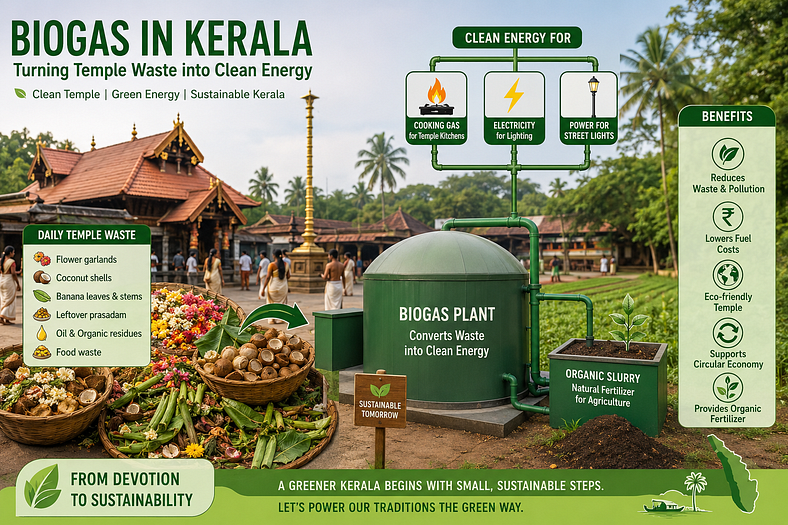
Every day, tons of flowers, banana leaves, coconut waste, leftover food, and oil residues are discarded from temples across Kerala. Most of this organic waste ends up in bins, riversides, or dumping yards. But what if these devotional leftovers could power homes, kitchens, and even streetlights?
The idea of converting temple waste into renewable energy is slowly becoming one of the most innovative discussions around biogas in Kerala. While many people associate biogas plants with households or farms, religious institutions generate a surprisingly large amount of biodegradable waste daily — especially during festivals, offerings, and special occasions.
Why Temple Waste is a Hidden Energy Source
Kerala is home to thousands of temples that receive massive daily footfall. Along with devotees comes organic waste such as:
- Flower garlands
- Coconut shells and scraps
- Banana stems and leaves
- Leftover prasadam
- Oil-based organic residues
- Food waste from temple kitchens
Instead of sending this waste to landfills, biogas systems can transform it into:
- Cooking gas for temple kitchens
- Electricity generation
- Organic slurry fertilizer for agriculture
- Sustainable waste management solutions
This creates a complete circular economy model.
The Kerala Advantage
The climate and cultural structure of Kerala make it ideal for decentralized biogas systems. Since the state already promotes eco-friendly practices and decentralized waste management, temple-based biogas projects can easily integrate into local sustainability programs.
In many towns, waste disposal near temples becomes a challenge during festival seasons. A biogas system can reduce:
- Bad odor
- Waste accumulation
- Transportation costs
- Environmental pollution
At the same time, temples can reduce LPG dependency and operational expenses.
Tourism + Sustainability = A New Identity
Kerala is globally known for responsible tourism. Imagine eco-certified temples powered partially by renewable energy generated from their own organic waste. This could become a unique tourism attraction where spirituality meets sustainability.
Such projects can inspire:
- Eco-tourism initiatives
- Green pilgrimage programs
- Sustainable community kitchens
- Organic farming partnerships
This makes biogas in Kerala more than just a waste solution — it becomes part of cultural and environmental transformation.
Future Possibilities
Experts believe that micro-biogas plants connected with temples, hostels, Ayurveda centers, and local markets could create localized green energy networks across Kerala.
If implemented properly, temple-based biogas systems could help Kerala:
- Reduce organic waste dumping
- Generate renewable fuel locally
- Support farmers with organic manure
- Promote sustainable religious infrastructure
The future of biogas in Kerala may not only come from industries or households — it could begin from the heart of Kerala’s cultural traditions.


Comments
Post a Comment