Biogas in Kerala — From Coconut Waste to Energy: A Hidden Rural Revolution
Introduction
Kerala’s identity is deeply rooted in coconut cultivation. From coastal belts to rural interiors, coconuts are everywhere — and so is the waste they generate. Husk piles, dried leaves, shells, and coir by-products often go underutilized or are burned.
But here’s a rarely discussed truth: Biogas in Kerala has the potential to convert this coconut waste into a powerful source of renewable energy. This isn’t just waste management — it’s a hidden rural revolution waiting to scale.
Understanding the Coconut Waste Challenge
Across Kerala, coconut farming produces massive amounts of organic residue:
- Coconut husk and shells
- Palm fronds and dry leaves
- Coir dust and processing waste
- Spoiled or unused coconuts
Most of this waste is either dumped or burned, leading to:
- Environmental pollution
- Loss of reusable biomass
- Missed economic opportunities
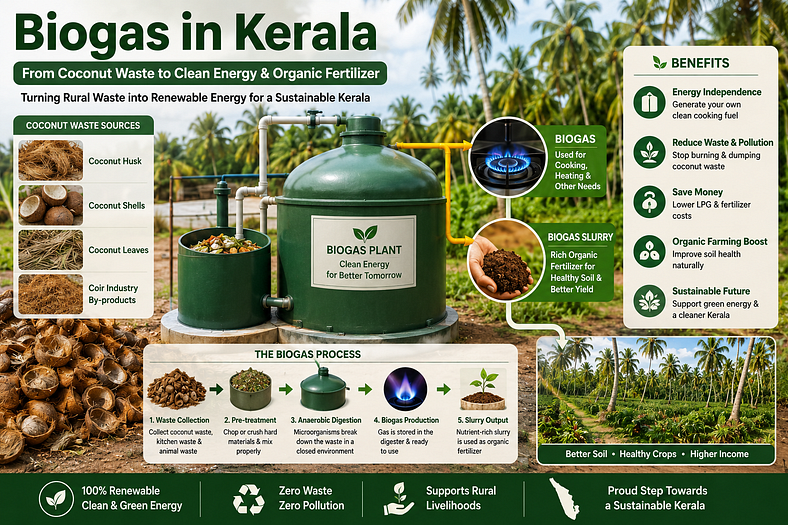
How Biogas Converts Coconut Waste into Energy
Biogas systems work best with soft organic waste — but with the right approach, coconut waste can also be utilized effectively.
The Process:
- Coconut waste is chopped or pre-treated
- Mixed with kitchen waste or cow dung
- Fed into a biogas digester
- Microorganisms break it down to produce gas
Output:
- Biogas: Used for cooking or heating
- Slurry: High-quality organic fertilizer
This combination makes Biogas in Kerala highly adaptable for rural and agricultural use.
Rare Insight: Agro-Biogas Hybrid Model
A unique and underutilized concept is the hybrid biogas system:
👉 Mix coconut waste + food waste + animal waste
Why this works so well:
- Ensures continuous gas production
- Balances carbon-rich and nitrogen-rich materials
- Improves digestion efficiency
This model is especially powerful for:
- Coconut farmers
- Small-scale agricultural households
- Rural communities
Benefits for Farmers and Rural Homes
1. Energy Independence
Farmers can reduce or eliminate LPG usage by producing their own cooking gas.
2. Organic Farming Boost
Biogas slurry is rich in nutrients, making it perfect for coconut trees and other crops.
3. Waste Management Solution
No more burning or dumping agricultural waste — everything gets reused.
4. Cost Savings
Long-term savings on fuel and fertilizers make the system economically viable.
Challenges You Should Know
Even though the idea is powerful, there are some practical considerations:
- Hard Material Handling: Coconut shells need crushing or preprocessing
- Awareness Gap: Many farmers are unaware of hybrid systems
- Initial Setup Cost: Can be a barrier without subsidies
However, with proper guidance and support, these challenges are manageable.
Future Potential of Biogas in Kerala
If adopted at scale, this model can transform rural Kerala:
- Promote sustainable agriculture
- Reduce dependence on chemical fertilizers
- Create decentralized energy systems
- Generate rural employment opportunities
Kerala can become a leader in agro-based renewable energy solutions through this approach.
Conclusion
Biogas in Kerala is not limited to kitchen waste — it has a much bigger opportunity hidden in coconut farming. By converting coconut waste into energy, farmers can unlock a sustainable, cost-effective, and eco-friendly future.


Comments
Post a Comment