Biogas in Kerala: A Game-Changer for Flood Resilience & Disaster Waste Management
Introduction
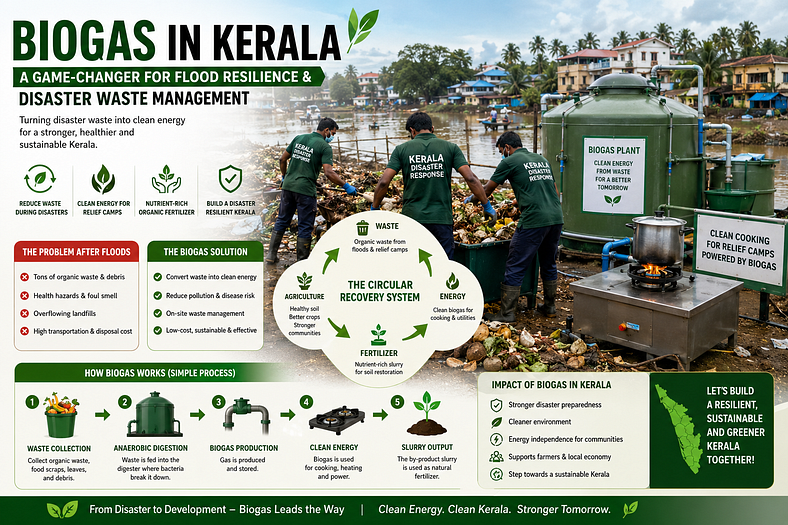
Kerala has faced repeated natural disasters over the past decade, especially devastating floods like the Kerala floods of 2018. While rebuilding homes and infrastructure often takes priority, one major issue remains overlooked — waste management after disasters.
Piles of organic waste, food debris, agricultural residue, and spoiled materials accumulate rapidly. This is where Biogas in Kerala can play a transformative role — not just as an energy solution, but as a powerful tool for disaster recovery and resilience.
The Hidden Crisis: Waste After Floods
Floods don’t just damage property — they create a secondary crisis:
- Tons of decomposing organic waste
- Health risks due to bacteria and foul gases
- Overflowing landfills and blocked drainage systems
Traditional waste disposal methods struggle to handle this sudden surge. Without proper systems, waste becomes a long-term environmental hazard.
How Biogas in Kerala Can Solve Disaster Waste Problems
Biogas technology offers a decentralized and immediate solution:
1. Rapid Organic Waste Conversion
Instead of transporting waste to distant landfills, temporary biogas units can convert it into gas on-site.
2. Clean Energy for Relief Camps
Biogas produced can be used for:
- Cooking in relief camps
- Heating water
- Powering small utilities
3. Reduction in Health Hazards
Processing waste quickly reduces:
- Methane emissions
- Bad odors
- Spread of disease-causing organisms
Temporary vs Permanent Biogas Solutions
Temporary Biogas Plants (Emergency Use)
- Portable and quick to install
- Ideal for relief camps and affected zones
- Can handle immediate waste load
Permanent Community Biogas Plants
- Installed post-disaster for long-term use
- Serve entire neighborhoods or പഞ്ചായത്തുകൾ
- Strengthen future disaster preparedness
Case Potential in Kerala
Imagine this scenario in districts like Alappuzha or Pathanamthitta:
- Flood waste collected and fed into community biogas plants
- Gas used in relief kitchens
- Slurry used to restore damaged agricultural land
This creates a circular recovery system:
👉 Waste → Energy → Fertilizer → Agriculture Revival
Role of Government & Organizations
Authorities like Kerala State Disaster Management Authority can integrate biogas into disaster planning by:
- Deploying mobile biogas units
- Training local self-governments
- Partnering with NGOs and startups
- Offering subsidies for community plants
Environmental & Economic Impact
Environmental Benefits
- Reduces landfill dependency
- Cuts greenhouse gas emissions
- Prevents water contamination
Economic Benefits
- Low-cost energy source for affected communities
- Reduces waste transportation costs
- Creates local employment opportunities
Challenges to Address
While promising, implementation requires:
- Awareness and training
- Initial investment support
- Proper maintenance systems
- Coordination between agencies
Future Vision: Disaster-Ready Kerala
The future of Biogas in Kerala goes beyond households. It can become a core part of disaster-resilient infrastructure.
By integrating biogas into flood management strategies, Kerala can:
- Respond faster to waste crises
- Build sustainable recovery models
- Lead India in climate-resilient innovation
Conclusion
Disasters are unpredictable — but preparedness doesn’t have to be. With the right approach, Biogas in Kerala can turn one of the biggest post-disaster challenges into an opportunity.
It’s not just about managing waste — it’s about rebuilding smarter, cleaner, and stronger.


.jpg)
Comments
Post a Comment